Malaria In Africa
Malaria in Africa is the most important disease hazard facing hunters. Malaria is widespread throughout most of Africa and is a serious and sometimes fatal disease.
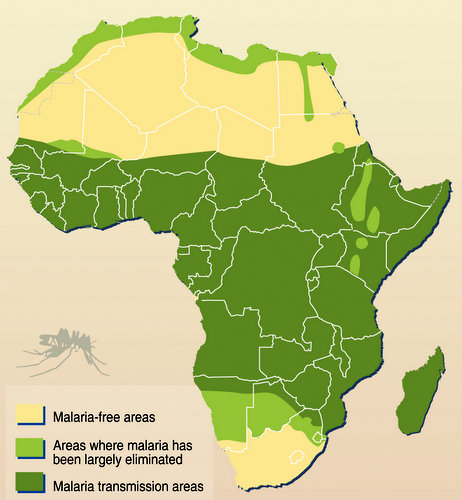
For individual country maps go to: Malaria in African Hunting Countries
Malaria Facts
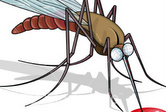
- Malaria is a parasitic disease spread by the bites of female Anopheles mosquitoes.
- Anopheles mosquitoes can be recognised by their 'head down' resting posture. Other types of mosquitoes hold their heads up in line with the body.
- The malaria parasite is called Plasmodium.
- 4 species of Plasmodium cause malaria in humans - Plasmodium Falciparum, Plasmodium Vivax, Plasmodium Ovale, Plasmodium Malariae.
- The parasites are in the mosquito saliva which is injected into the person to prevent the blood coagulating.
- The severity of the malaria disease is related to the number of parasites in the person's blood.
- Falciparum malaria is the most serious causing severe or even fatal consequences.
Malaria Symptoms
- The incubation period from the time of the bite to symptoms appearing is 5 to 10 days but may be up to even a year if anti-malarial drugs were taken.
- Principal symptoms are fever, chills with sweating, headache, abdominal pain and jaundice.
- Severe falciparum malaria causes symptoms associated with liver and kidney failure, anaemia, convulsions and coma.
Malaria Diagnosis
- As the early symptoms of malaria are pretty non-specific, be aware of the possibility of having malaria for at least a year after you return home from a malarial area.
- If you get any fevers or other vague symptoms, seek medical attention and a malaria test as soon as possible.
Malaria Testing Kits
- If you are going to be hunting or travelling in a very remote malarial area of Africa consider taking some malaria testing kits.
- They are small and simple to use. All the requirements (lance, reagent, sterile swab and indicator) are sealed in a sterile pouch. A pin prick of blood is mixed with a reagent and placed on an indicator strip rather like pregnancy testing. The result can be read after a few minutes.
- They can be purchased at most travel clinics or pharmacist shops.
Malaria Treatment
- Again, if you are going to a remote malarial area, discuss with your travel medicine expert or physician the merits of taking malarial treatment drugs.
- Coartem tablets (Artemeter and lumefantrine) can be used to treat uncomplicated falciparum and vivax malaria.
- Coartem is an intensive 3 day course of tablets with dosage dependent on body weight. Read the instructions carefully.
- Take a few boxes of Coartem in case you need to help others.
Malaria Prevention
You cannot be vaccinated against malaria in Africa or elsewhere, but you can protect yourself in 3 ways:
- Avoiding mosquito bites
- Taking anti-malarial drugs
- Getting prompt treatment if you suspect you or someone with you may have malaria
Avoiding Mosquito Bites
- Mosquitoes bite at any time of day but most bites occur in the evening.
- If you are out in the evening or night, wear long-sleeved clothing and long trousers.
- Mosquitoes may bite through thin clothing, so spray an insecticide or repellent on them. Insect repellents should also be used on exposed skin.
- Spraying insecticides in the room, burning pyrethroid coils and heating insecticide impregnated tablets all help to control mosquitoes
- If sleeping in an unscreened room, or out of doors, a mosquito net (which should be impregnated with insecticide) is a sensible precaution.
- Garlic, Vitamin B and ultrasound devices do not prevent mosquito bites.
Taking Anti-Malarial Drugs
- Start taking anti-malarial drugs before travel as guided by your travel health advisor. Some anti-malarials need to be started three weeks before arriving in a malarial area.
- Take the tablets absolutely regularly, preferably with or after a meal.
- It is extremely important to continue to take them for four weeks after you have returned, to cover the incubation period of the disease. Malarone is require to be taken for only 7 days post-travel.
- Make sure you use a drug which you can tolerate and one which is appropriate for your African destination(s).
- Be aware that no anti-malarial drug is 100% effective
Prompt Treatment
- There is no guarantee of complete protection from malaria in Africa.
- If you get a fever between one week after first exposure and up to one year after your return, you should seek medical attention and tell the doctor that you have been in a malaria area.
Common Anti-Malarial Drugs
ChloroquineBrands: Avloclor, Nivaquine
- Consider a trial course before departure if using this regime for the first time. This is recommended to detect if you are likely to get side effects.
- Chloroquine should be started one week before exposure (to ensure adequate blood levels), throughout exposure and for 4 weeks afterwards.
- Nausea and sometimes diarrhoea can occur which may be reduced by taking tablets after food.
- Headache, rashes, skin itch, blurred distance vision (which may take up to 4 weeks to reverse) or hair loss may warrant changing to alternative drugs.
- Use with caution with liver and renal disease.
- Can aggravate psoriasis and very occasionally causes a convulsion so it should not normally be used in those with epilepsy.
Brand: Paludrine
- One or two doses should be taken before departure. It should be continued throughout exposure and for 4 weeks afterwards.
- Anorexia, nausea, diarrhoea and mouth ulcers can occur.
- Can delay the metabolism of the anticoagulant, warfarin, and result in bleeding. Those planning to take warfarin must discuss this with their doctor before starting any treatment.
- Use with caution with renal impairment.
Brand: Lariam
- One dose should be taken a week before departure and it should be continued throughout exposure and for 4 weeks afterwards.
- Three doses at weekly intervals prior to departure are advised if the drug has not been used before - this can often detect, in advance, those likely to get side effects so that an alternative can be prescribed.
- Nausea, diarrhoea, dizziness, abdominal pain, rashes and pruritis can occur.
- Headache, dizziness, convulsions, sleep disturbances (insomnia, vivid dreams) and psychotic reactions such as depression have been reported. These reactions most commonly begin within 2-3 weeks of starting the drug and may be worse if alcohol is taken around the same time.
- Avoid in epilepsy or if there is a history of psychiatric illness.
- Exercise caution, and avoid if alternatives are available, in severe renal and liver failure and heart rhythm defects.
- Also caution in those taking digoxin, beta or calcium channel blockers when arrhythmias and bradycardia can occur.
Brands: Vibramycin, Doxymal
- This is a broad-spectrum antibiotic of the tetracycline class used in the treatment of infections caused by bacteria and certain parasites.
- Can normally be used continuously for a period of at least 6 months.
- Consider a trial course before departure, if you are using this regime for the first time, to detect if you are likely to get side effects.
- Doxycycline need only be started just before exposure (2 days), continued through exposure and for 4 weeks afterwards.
- Sunburn due to sunlight sensitivity can occur. Use of sunscreens is especially important and if severe, alternative prophylaxis should be used.
- Heartburn is common so the capsule should be taken with a full glass of water and preferably while standing upright.
- It may reduce the effectiveness of the oral contraceptive pill.
- Taking the capsule in the evening should reduce the sun sensitivity during the day.
- It is a good idea to take daily acidophilus medication to minimise the risk of a candidal (thrush) infection which incidentally can affect men as well as women.
- Occasionally anorexia, nausea, diarrhoea, candida infection and sore tongue have been reported.
Brand: Malarone
- Do not confuse with Maloprim
- Should be taken for 1 or 2 days before entering the malaria area, throughout exposure, and for 7 days after leaving the infected area.
- Need only be commenced one or two days before exposure.
- Abdominal pain, headache, anorexia, nausea, diarrhoea, coughing and mouth ulcers can occur.
- Absorption may be reduced by diarrhoea and vomiting, and blood levels are significantly reduced with concomitant use of tetracyclines, metoclopramide and some other drugs.
- The proguanil component can delay the metabolism of the anticoagulant, warfarin, and result in bleeding. Those planning to take warfarin must discuss this with their doctor before starting any treatment.
- Use with caution with renal impairment.
Summary For African Travellers and Hunters
- Minimise the risk of mosquito bites by applying insect repellents especially at dusk when Anopheles mosquitoes prefer to bite.
- Always travel with an adequate supply of anti-malarial prophylactic drugs and take them regularly.
- Remember preventative measures are not 100% guaranteed. The most careful person may still get malaria.
- Remember just a general 'unwell' feeling may be falciparum malaria and early treatment is crucial.
- Make sure you have emergency evacuation cover which can be actioned immediately to get to at least the nearest city.

More On African Hunt Health
- Health Before Hunt
- Health During Hunt
- Health After Hunt
- Polio In Africa
- Tetanus In Africa
- Diphtheria In Africa
- Tuberculosis In Africa
- Measles In Africa
- Yellow Fever In Africa
- Typhoid In Africa
- Meningitis In Africa
- Hepatitis In Africa
- Rabies In Africa
- Cholera In Africa
- Schistosomiasis In Africa
- Malaria In Africa
- Malaria In African Hunting Countries
- African Tick Bite Fever
- Sleeping Sickness
- Insect Repellents For Africa
- Home >
- African Hunt Health >
- Health Before Hunt >
- Malaria In Africa
Page Updated: Mar 2024

Shakari Connection Bookshelf
Browse the Bookshelf mini-site for thousands of African hunting books and much more....

African Hunting Countries
- Hunting Benin Benin Travel
- Hunting Botswana Botswana Travel
- Hunting Burkina Faso Burkina Faso Travel
- Hunting Cameroon Cameroon Travel
- Hunting Central African Republic Central African Republic Travel
- Hunting Ethiopia Ethiopia Travel
- Hunting Mozambique Mozambique Travel
- Hunting Namibia Namibia Travel
- Hunting South Africa South Africa Travel
- Hunting Tanzania Tanzania Travel
- Hunting Uganda Uganda Travel
- Hunting Zambia Zambia Travel
- Hunting Zimbabwe Zimbabwe Travel
Hunting Gear For Africa
- Ammo Holders
- Flashlights / Torches
- Headlamps
- Other Light Gadgets
- Hearing Protectors
- Gaiters
- Personal Water Bottles
- Hydration Backpacks
European Hunting
African Travel For Hunters
- First Time To Africa?
- Money In Africa
- Travel Agents For Africa
- Airlines To Africa
- African Airports
- Airport Security Tips
- Tips For Packing Luggage
- Airline Baggage Allowances
- Airline Lost Baggage
- Jet-Lag Remedies & Longhaul Flight Survival
- Air Charters In Africa
- Visas & Passports
- Global Rescue
- Travel Insurance

African Hunter Magazine
African Game Animals
Miscellaneous Hunting Topics
- African Hunting Articles
- African Hunt Packing List
- Hunt Preparation Checklist
- African Trophy Photography
- African Hunting Seasons
- Weather In Africa
- African Moonlight
- Your African Hunt Stories
African Wildlife Art
Create Your Own Website

Affiliate Disclosure
Shakari Connection is a participant in the Amazon Services LLC Associates Program, an affiliate advertising program designed to provide a means for sites to earn advertising fees by advertising and linking to amazon.com
Visitors' Favourite Pages
|
|
|
|
|
| Double Rifles | Baboon Hunting | Safari Hats | Insect Repellents For Africa | African Hunter Shot Placement |


Copyright © 2008-2024. All rights reserved. No part of this website may be reproduced for publication without written permission.