Insect Repellents For Africa
Page Updated: Mar 2024
What are the best, most effective, safest insect repellents for Africa?
There is a myriad of insect repellent manufacturers, brands, ingredient concentrations in sprays, creams, sticks, wipes, odour-free, combinations with sunscreens etc etc.
The answer is to use what suits you best and works for you but you would be strongly urged not to use 'alternative' or 'natural' repellents as your first line of defence, if you are hunting in a malarial area. Malaria falciparum can be a deadly disease and it only takes 1 bite from 1 female Anopheles mosquito to be struck down. The other brands of malaria are none too pleasant though not quite so dangerous.
Preventing Insect Bites
You can expect a good African hunting outfitter to provide an insect proof tent (if you are going to a tented camp), insect window screening (if you are going to a permanent chalet camp) and a can of Doom. Short of this, it's up to you to protect yourself from insect bites which is especially important in malarial areas of Africa.
If you are concerned about malaria, choose to hunt in a non-malarial area. There are many hunts available in RSA, Namibia and Botswana in non-malarial areas.
So unless you genuinely react badly to a DEET-based insect repellent the following measures offer the best personal protection against malaria...
Use all the herbal oils, sprays, soaps, garlic capsules, citronella and lemon eucalyptus and clove oil concoctions you want but in addition to sensible proven methods of insect repelling. If you are one of the increasing number of people averse putting 'chemicals' on your body, don't go to malarial areas of Africa - malaria is always a serious disease and may be a deadly illness.
"Travelers to sub-Saharan Africa have the greatest risk of both getting malaria and dying from their infection. However, all travelers to countries where malaria is present may be at risk for infection." CDC (Centers for Disease Control and Prevention)
Protection Against Mosquitoes
By far, biting mosquitoes are vectors in the spread of the most serious and potentially life threatening diseases in Africa. These include not only malaria but dengue fever, yellow fever and Chikungunya disease amongst others. So it is very important to protect yourself against all mosquito bites while in Africa.
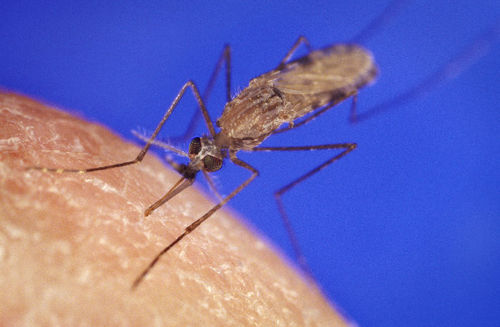
Anopheles Mosquitoes
Most of the mosquitoes responsible for malaria (female Anopheles genus) are crepuscular (active at dusk or dawn) or nocturnal (active at night). Depending on local conditions, some bite indoors, while others bite outdoors. After feeding, some Anopheles mosquitoes prefer to rest indoors, while others prefer to rest outdoors. So bites by nocturnal, indoor Anopheles mosquitoes can be greatly reduced through the use of insecticide-treated bed nets or insect proof window screens.
Adult Anopheles mosquitoes can be distinguished from other mosquitoes by long appendages near the proboscis and indistinct blocks of black and white scales on the wings. Adults can also be identified by their typical resting position with their abdomens sticking up in the air rather than parallel to the surface on which they are resting.
Aedes Mosquitoes
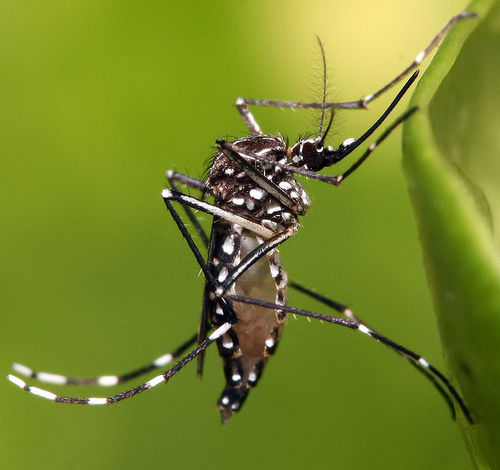
The Aedes genus of mosquitoes includes Aedes aegypti which that can spread dengue fever, chikungunya, Zika fever and yellow fever. These are visually distinctive because they have black and white markings on their bodies and legs. Unlike most other mosquitoes, they are active and bite only during the daytime. The peak biting periods are early in the morning and in the evening before dusk.
Please note, this page contains affiliate links, which means Shakari Connection receives a commission if you make a purchase using these links.
- If you are going to a malarial or border-line malarial area, check with the outfitter whether mosquito nets are provided. In some tented camps and chalet camps, nets are not provided as the whole tent/room is considered insect proof. If you want to bring your own mosquito net check whether the net design will work with the (single or double) beds in the camp and that there is a way of hanging it.
- A good quality permethrin impregnated bed net is better than a plain one. Tuck it in securely and any repair holes promptly. A good quick fix for holes is a band aid sticking plaster. Don't sleep with your skin touching the net, if possible - mosquitoes can stick their proboscis through the mesh.
- Even if the area is not malarial you may want to use a mosquito net for protection against any other nocturnal insect bites.
- Don't forget to set up and close/tuck in the drapes of your bed net before dark so no mosquitoes can get in there before you.
- Just to be sure, before you go to dinner, give your room or tent a good spray with insecticide, paying particular attention to dark areas like under the bed, behind the bedside table, etc. Turn out the lights, check all windows (if unscreened) are closed and zip up the tent or close the door securely.
- If your room has air-conditioning or a ceiling fan, keep it on in the evening to lower the room temperature which deters mosquitoes.
- Don't forget your insect repellent precautions in a hotel in town before or after the hunt. You are equally likely to get bitten in a hotel in Dar es Salaam as in a hunting camp.
So the peak biting activity of these disease-bearing types of mosquitoes is early morning, just before dusk, during the night and can be both indoors or outdoors. So these are the times you must be most vigilant and ensure you are protected from bites as best as possible.
Mosquito Protection At Night, Indoors
Mosquito Protection In Early Morning, Early Evening & Night, Outdoors
In the early morning you will probably be wearing your hunting clothes ready to go out for the day, which will probably be long trousers, long-sleeved shirt, socks and boots, so you should be well-protected. However, you might want to put on some insect repellent on the exposed skin areas.
It is in the evening when outside dining or relaxing around the campfire, that some hunters want to throw on a comfy pair of shorts, a T-shirt and sandals after their shower. Perfectly understandable but it does expose a lot of skin for a mosquito.
- It is best to wear long sleeves and long trousers at dusk and after dark.
- Mosquitoes are particularly attracted to foot odours and can get get busy in the dim light under the table while you are eating, so pay particular attention to foot and ankle protection by ideally wearing socks, ankle boots and insect repellent on the lower legs in the evening. If you can't bear to relax in boots and socks and prefer sandals and bare feet, make sure you smother your feet and ankles in repellent.
- Use your personal insect repellent on all other exposed skin areas.
- Wear light coloured clothing in the evenings as it has been suggested that mosquitoes are attracted to dark colours like blue and black. Khaki, green and light khaki colours usually worn by hunters during the day are considered not to be attractive to moquitoes. While colour attraction has been proven with tsetse flies, it remains unclear with mosquitoes. Carbondioxide, heat and scent are the biggest draws for mosquitoes. Specific ingredients of sweat and other skin secretions, can make one person more attractive to a mosquito than another.
- Wear clean clothes in the evening, especially socks as mosquitoes are attracted to the odour of sweat.
Insect Repellents For Mosquitoes
It's worth noting that each repellent compound has a different efficacy against different mosquito species. So your favourite backyard or deer hunting brand may not be as effective on African mosquito species. It may work at first, preventing mosquitoes landing and biting, but often the effect wears off and different mosquito species soon start biting.
DEET Based Insect Repellents
You will find there are no DEET insect repellents available on Amazon. For example, you will find Repel 100 98% DEET listed but unavailable to purchase on Amazon. There are plenty of DEET-free and so called 'natural' or herbal repellents. These products do not provide good enough protection against mosquito bites in malarial areas of Africa and, as said before, malaria can cause serious illness and maybe death.
So US hunters and travellers in malarial areas of Africa will have to shop elsewhere for DEET insect repellents. Walgreens sell a variety of DEET insect repellents in varying brands and strengths, as does Ben's.
It may be just an Amazon decision not to sell DEET products as generally, in the USA, DEET is permitted to be sold and used in registered formulations of 5% to 99% for direct application to human skin. Approximately 120 products containing DEET are currently registered with the EPA by about 30 different companies. Some DEET products in the USA are 95% DEET and others are as low as 5%. The reason for such a wide spectrum is nothing to do with the efficiency of DEET to repel the mosquitos and other biting insects, but it is a measure of how long the repellent effect lasts. It is generally accepted that above a 50% dilution there is no additional benefit. See more EPA information and safety reviews of DEET.
However, in the UK and EU, there have been significant changes to the availability of DEET due to the EU Biocidal Products Regulations 528/2012 (BPR). A 'biocide' is any substance that repels, attracts or kills any living organism which, of course, is what DEET obviously does. The BPR was introduced to standardise the process by which biocides are authorised across all EU countries and DEET was one of the first products to be regulated. This regulatory process takes years and involves manufacturers submitting dermatological and efficacy reports to ensure that products are safe and effective. This is why many brands that contain DEET have been dropped by retailers.
As part of the this regulatory process 100% DEET products have now been withdrawn throughout the Europe and are no longer available. Also DEET repellents over 50% in strength have not been legal for sale in the EU since 2016. With regard to personal protection measures against mosquitos and malaria, The European Centre for Disease Prevention and Control stated ... "Use mosquito repellent in accordance with the instructions indicated on the product label" and makes no recommendations for the use of repellents containing DEET in concentrations of 20%.
DEET insect repellent products in the UK are available from Lifesystems in the Expedition 50 Pro and Expedition Max. In the UK Lifesystems repellents do not fall under the requirements for product authorisation under the BPR legislation as some of the active ingredients are still under evaluation. Lifesystems repellents continue to comply with all relevant local and national legislations.
DEET can be bought in the EU from some online shops such as Care Plus DEET Repellent Lotion 50% from Inuka Adventure Equipment. The excellent Australian Bushman Insect Repellent (40% DEET) is available in Sweden.
- DEET (N,N-Diethyl-meta-toluamide) repels the mosquito by interfering with their sense organs or antennae which locate their victims. It is available in many preparations - lotions, sticks, gels, creams, aerosol sprays and in various strengths.
- DEET is usually applied directly on exposed skin.
- Applying DEET to cotton clothing near vulnerable areas like necks, wrists and ankles, or using DEET or other repellent impregnated elastic wrist and ankle bands has been proven to be ineffective in repelling mosquitoes. DEET mosquito repellent only works on the surface to which it's applied directly - your skin.
- Wrist/Ankle bands do not work. Despite the marketing of these products claiming they are "infused with high levels of deet and create a protective halo around you when worn on your wrists or ankles", mosquitoes are blissfully unware of the 'halo'. Mosquitoes will bite unprotected skin 4 cm away from a 'repellent' wristband and have been known to land on and try to bite the 'repellent' wristbands. Studies show repellent-impregnated wristbands, containing either 9.5% DEET or 25% citronella, protected the wearer for only 12 to 18 seconds, on average.
Note, in the USA, most elastic wrist and ankle bands are sold as DEET-free items, only impregnated with so called 'natural' repellents like citronella or peppermint oil. These do not work and are never recommended for first line of defence use in malarial areas. - DEET also protects against other insects but is not as good as permethrin for repelling ticks.
- Apply DEET carefully to avoid eyes and mouth - especially your eyes!
- Watch for any adverse reactions and stop using if you get a serious reaction. If using a DEET product for the first time, it may be a good idea to try it out before travelling to a malarial area to see if you do get a serious skin reaction.
- DEET is harmful to plastics, paint and synthetic fabrics - it will dissolve items like plastic sunglasses, watch straps, polythene storage bags, etc. It will also discolour cotton clothing.
- Concentrations of no more than 10% - 30% DEET should be used on children between 6 months and 12 years of age.
- For adults, the weaker the concentration of DEET, the shorter the time of protection. For example, 23.8% DEET will work for about 5 hours. However, there is a limit to the time of protection - 100% DEET concentration may only provide protection for about 10 hours.
- The length of DEET protection time will often be shorter in heat, humidity, with sweating and getting rubbed off on clothing. So reapplication may be necessary before the time advertised on the bottle. Incidentally, some countries measure their DEET products protection time differently - some measure time elapsed until first mosquito bite, others until the mosquito just lands on skin.
- When out hunting in the African open bushveldt country, you generally don't need mosquito protection during the day, except early morning, but you may require protection from other insects such as ticks and tsetse flies. However, if you are hunting thick, shady riverine areas or boggy, wet rainforests where mosquitoes frequent at any time of day, you'll be well advised to put on the highest DEET concentration for the longest protection duration.
- A combination of 33.3% DEET + permethrin impregnated clothing will provide about 8 hours protection under severe mosquito pressure.
More About DEET
Controlled-Release DEET Repellents
Controlled-release repellent encapsulates the DEET in a special base that allows it to be released more slowly on to the skin surface. The advantages of this technology include longer-lasting protection, the use of lower concentrations of DEET and reduction of the number of times that re-application of the product may be necessary.
The controlled-release DEET products contain 20% to 30% DEET and provide protection for up to 12 hours. It is also more compatible with plastics, synthetic fabrics and similar materials.
Sawyer insect repellent products, including the controlled release repellent, are not available on Amazon. In the US, it is available at Walmart or go to the Sawyer website to find other stockists.
For high risk malarial areas consider using...
- Ultrathon Insect Repellent which contains 34.34% DEET with control-released protection for up to 12 hours. It is also water and sweat resistant.
- Ben's 100% DEET Mosquito, Tick and Insect Repellent formula gives up to 10 hours of protection against mosquitoes and ticks.
- Sawyer Products Premium Maxi-DEET Insect Repellent contains 98% DEET and gives up to 10 hours of protection against mosquitoes.
- Repel 100 Insect Repellent contains 98.11% DEET for up to 10 hours of protection against mosquitoes.
Applying DEET Insect Repellents
Be aware of peak mosquito exposure times...remember the female Anopheles mosquito which transmits malaria tends to bite between dusk until dawn and the Aedes mosquito tends to bite during the day.
- Get your mosquito repellent application timing right. Don't wait to get bitten or leave it too late before remembering to put on your repellent - apply repellent evenly over all exposed skin before dusk, when the malarial mosquitoes may start biting.
- Apply and re-apply your repellent as per the instructions on the bottle and according to your activity - if you get hot and sweaty or wet you may need to re-apply repellent more frequently.
- If you want to wear sun and insect protection at the same time, apply the sun cream first and the insect repellent on top. Note, DEET can reduce the efficacy of sunscreen when applied to the same area, so you may need to reapply the sunscreen more frequently to prevent sunburn.
- It is easier to spray or apply the repellent on to your hands first and then thinly spread it over your exposed skin areas. Spraying your face directly is not recommended as the repellent can get into your eyes and mouth.
- Don't put on too much DEET repellent or put it on your clothes or on skin under your clothes - it is not necessary and may damage your clothes, especially if they are synthetic.
- Do not inhale the DEET fumes - so do not apply it under your nose.
- Wash you hands after applying DEET - be careful not to get it on any plastic items such as sunglasses, phone, etc. If you spill some down the bottle, wipe it clean if you store it in a plastic bag.
- It is recommended you wash DEET products off your skin (especially hands and face) before going to bed.
- Don't apply DEET repellent to cut or inflamed skin.
- Do not allow young children to put on any insect repellent themselves. An adult should always apply any insect repellent on a child - especially DEET repellents. Children are more susceptible to the adverse effects of DEET than adults.
- If you feel you are particularly attractive to mosquitoes, you could apply more than one type of repellent such as a light coating of DEET with another layer of Picaridin or Oil of Lemon Eucalyptus (OLE).
Permethrin Insect Repellents
- Permethrin is a synthetic pyrethroid insecticide and kills mosquitoes on contact by destroying their nerve cells.
- Permethrin must not be applied directly to the skin.
- For Do-It-Yourself Permethrin Clothing Insect Repellent - only spray the exterior of your outer garments 2-4 hours before wearing. All brands of permethrin fabric repellents are currently unavailable on Amazon.com
- Do not treat underwear, hats, caps, collars or any inner clothing with permethrin. Permethrin should not be used on clothes/parts of clothes which contact skin.
- Permethrin products for clothes contain 0.5% permethrin.
- Insect repellent clothes, such as those labelled as 'Insect Shield' or 'BugsAway', are available which are ready-impregnated with permethrin.
- Ready-impregnated garments are said to provide protection for the duration of 70 washes.
- Permethrin impregnated mosquito nets are available or you can treat a plain net with a Permethrin spray.
- Permethrin-impregnated clothing also repels ticks.
Picaridin Mosquito Repellents
- Picaridin is a synthetic compound made to resemble the natural compound piperine, which is found in plants that are used to produce black pepper. Picaridin has been widely used as an insect repellent in Europe and Australia, but has only been available in the United States since 2005.
- Picaridin repels insects and makes them less likely to bite. It seems to block mosquitoes by disrupting their sensory organs used to locate their victims. Picaridin doesn't actually kill insects.
- Picaridin may be also known as KBR3023, Bayrepel, Icaridin or Saltidin.
- Unlike DEET, Picaridin is odourless, does not feel greasy or sticky and is less likely to irritate the skin or damage plastics or fabrics.
- Studies concluded that picaridin in concentration of 19.2% is as effective as the same concentration of DEET. Any product with less than 20% picaridin offers little or no protection.
- Picaridin is not known to be toxic if properly used and not ingested.
- Sawyer Picaridin insect repellent stockists can be found here. Picardin is also available at Avon as Skin So Soft Bug Guard Plus Picaridin Pump Spray.
Oil of Lemon Eucalyptus (OLE) Mosquito Repellents
- Oil of lemon eucalyptus (OLE) is also know as PMD (para-menthane-3,8-diol) or Citriodiol, is the synthesized lemon eucalyptus oil and has demonstrated some efficacy as an insect repellent. It is among the type of repellents listed by the CDC which "provide repellent activity sufficient to help people reduce the bites of disease-carrying mosquitoes".
- Oil of Lemon Eucalyptus (OLE) is not the same as pure lemon eucalyptus essential oil which is chemically quite different and is not recommended to be used as an insect repellent, having not undergone testing for safety and efficacy.
- In a Comparative Efficacy of Insect Repellents against Mosquito Bites study, 30% Oil of Lemon Eucalyptus gave a complete mosquito bite protection time of 2 hours - even though the products tested claim 6 hours protection.
- If you want to try OLE in combination with other repellents, brands include Repel Oil of Lemon Eucalyptus and Natrapel Lemon Eucalyptus.
IR3535 Insect Repellents
- IR3535 is another synthetic insect repellent on the market. This repellent has been used in Europe for more than 20 years and was approved for use in the United States in 1999.
- The CDC lists IR3535 as providing "repellent activity sufficient to help people reduce the bites of disease-carrying mosquitoes", and contains active ingredients which typically provide "reasonably long-lasting protection".
- In tests, the IR3535 repellent ingredient yielded a mean complete protection time of 22 minutes - 1/4 of the lowest concentration DEET (4.75%) product tested.
- IR3535 is found in Avon Skin-So-Soft Bug Guard Plus IR3535 Expedition Insect Repellent which specifically says ... "Repels mosquitoes that may transmit West Nile Virus for 8 hours. It does not mention malaria or other diseases transmitted by mosquitoes.
'Natural' Mosquito Repellents
- It is commonly assumed that plant-based repellents are safer than DEET because they are 'natural', 'chemical-free', 'organic', 'green' or 'clean'. These are common terms which are completely misleading product marketing phrases. Everything in life is a 'chemical' including water and products are 'man-made' in a lab. There are no legal guidelines or industry standards for labelling a product as 'natural'. If a product is labelled as 'natural’ or similar, the consumer thinks they are doing themselves some good. They must read the label and educate themselves to know that it cannot be assumed that 'natural' equates to safe, especially when you are travelling in a malarial area of Africa.
- Would you buy this popular example of a 'natural' insect repellent for an African safari in Tanzania? Hopefully not.
"Use on the whole family for natural protection from mosquitoes, ticks, fleas, black flies, deer flies, yellow flies, chiggers, red bugs, bed bugs, sand fleas, yellow jackets, no-see-ums, household pests and... ALL BITING BUGS! XXXXX is a safe alternative to harsh chemical repellents. Our formula was developed in the humid, hot, swampy, bug infested climates of Florida. It has been tested at the University of XXXXX for effectiveness where it outlasted common name-brand Deet products! Lasts up to 8 hours! XXXXX not only works great, but smells wonderful and leaves your skin feeling soft and smooth". - There are dozens of 'natural', herbal or botanical products that are credited with mosquito repellent properties including essential oils of Geranium, Cedar, Rosemary, Cinnamon, Citronella, Clove, Lemon Eucalyptus, Castor, Lemongrass and Peppermint.
- Because these 'natural' herbal products are so toxic in high concentrations, repellent formulations tend to contain small amounts (0.05 to 1.0%) of the active ingredient. Consequently they need to be re-applied very frequently - at least 2 hourly, some requiring 6 applications per hour!
- Certain other factors can also lower their effectiveness - they evaporate quickly in high temperatures, get diluted with sweat and some sunscreens lower their potency.
- Do NOT use these as a first line of defence against mosquito bites in malarial areas.
Other Mosquito Repellent Items
- Mosquito repellent coils and vaporizing mats may be good measures to add to the repellent armoury for inside your room.
- Electronic anti-mosquito buzzers and sonic devices which mimic sounds that are supposed to scare female mosquitoes away have been proved to be useless.
- The mosquito repelling benefits of ingesting mega-doses of B vitamins, brewer's yeast, garlic, beer, whisky, cigars and cigarettes have never been shown in controlled scientific studies to protect users from biting insects.
Whatever insect repellent you choose for hunting in Africa, make sure you actually use it. You won't believe the number of unopened bottles of insect repellent PHs get given by hunters over the years, when they offload items for their return journey.
More On Insect Protection In Africa
- Malaria In Africa
- Malaria In African Hunting Countries
- Insect Repellents For Africa
- African Tick Bite Fever
- Tick Repellents For Africa
- Sleeping Sickness
- Tsetse Fly Repellents For Africa
- Insect Repellent Clothing

Shakari Connection Bookshelf
Browse the Bookshelf mini-site for thousands of African hunting books and much more....

African Hunting Countries
- Hunting Benin Benin Travel
- Hunting Botswana Botswana Travel
- Hunting Burkina Faso Burkina Faso Travel
- Hunting Cameroon Cameroon Travel
- Hunting Central African Republic Central African Republic Travel
- Hunting Ethiopia Ethiopia Travel
- Hunting Mozambique Mozambique Travel
- Hunting Namibia Namibia Travel
- Hunting South Africa South Africa Travel
- Hunting Tanzania Tanzania Travel
- Hunting Uganda Uganda Travel
- Hunting Zambia Zambia Travel
- Hunting Zimbabwe Zimbabwe Travel
Hunting Gear For Africa
- Cartridge Belts
- Ammo Holders
- Flashlights / Torches
- Headlamps
- Other Light Gadgets
- Hearing Protectors
- Gaiters
- Personal Water Bottles
- Hydration Backpacks
European Hunting
African Hunter Magazine
African Game Animals
Miscellaneous Hunting Topics
- African Hunting Articles
- African Hunt Packing List
- Hunt Preparation Checklist
- African Trophy Photography
- African Hunting Seasons
- Weather In Africa
- African Moonlight
- Your African Hunt Stories
African Wildlife Art
Create Your Own Website

Affiliate Disclosure
Shakari Connection is a participant in the Amazon Services LLC Associates Program, an affiliate advertising program designed to provide a means for sites to earn advertising fees by advertising and linking to amazon.com
Visitors' Favourite Pages

|

|
|
|
|
| Double Rifles | Baboon Hunting | Safari Hats | Insect Repellents For Africa | African Hunter Shot Placement |


Copyright © 2008-2024. All rights reserved. No part of this website may be reproduced for publication without written permission.