Baboon Hunting
Although there are a variety of baboon subspecies, hunting methods are pretty much the same.
"If a man wants to test his hunting ability I suggest that he try chacma baboons. No animal, not even the African buffalo, ever led me such a futile chase as did those grey rascals. To this day I'm not sure that I have more brains than a baboon." Alexander Lake
Baboon Species
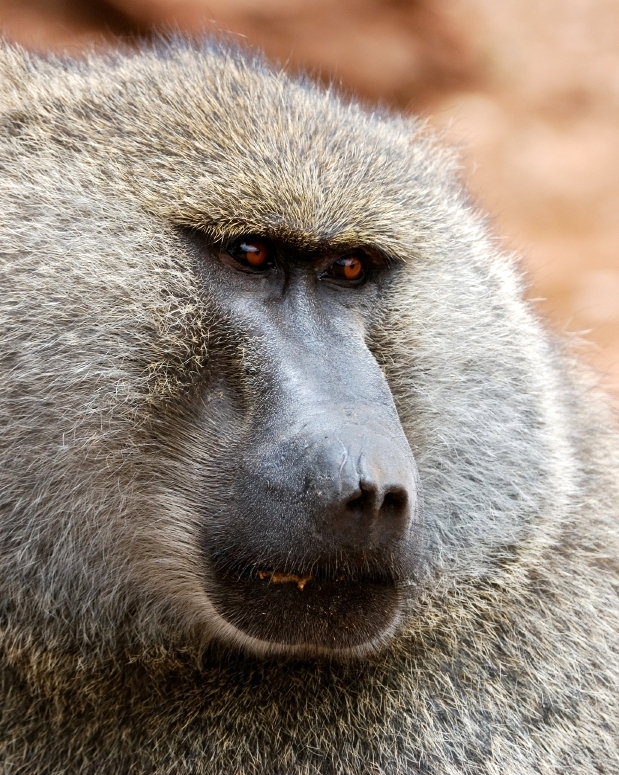
- Olive Baboon - Papio anubis
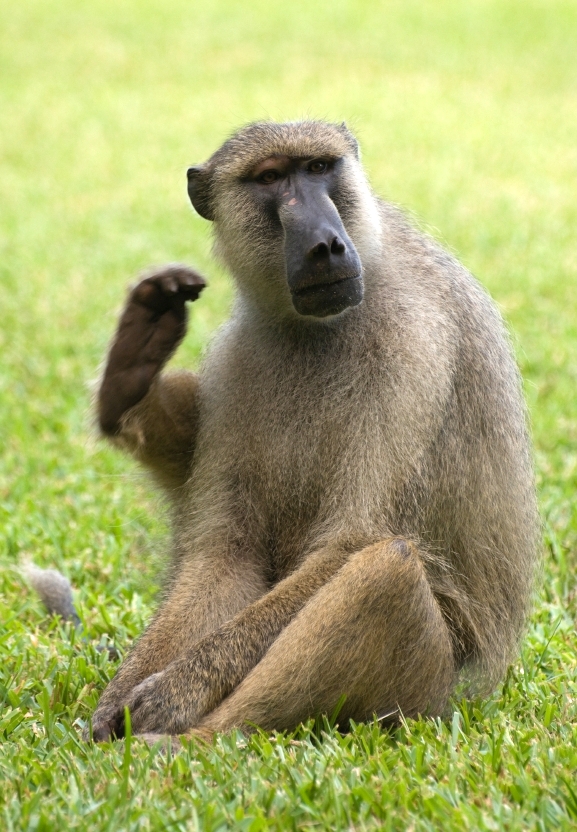
- Yellow Baboon - Papio cynocephalus, with 3 sub-species
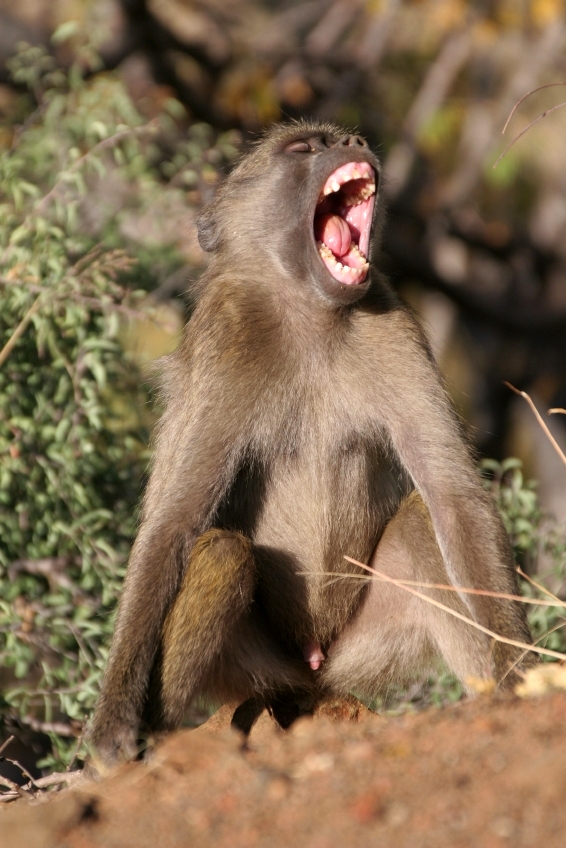
- Chacma Baboon - Papio ursinus, with 3 sub-species
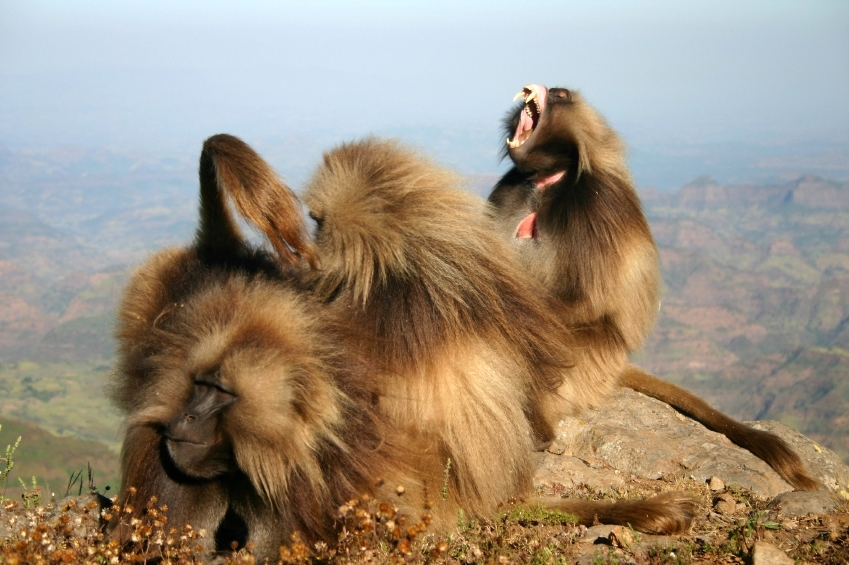
- Gelada Baboon - Theropithecus gelada
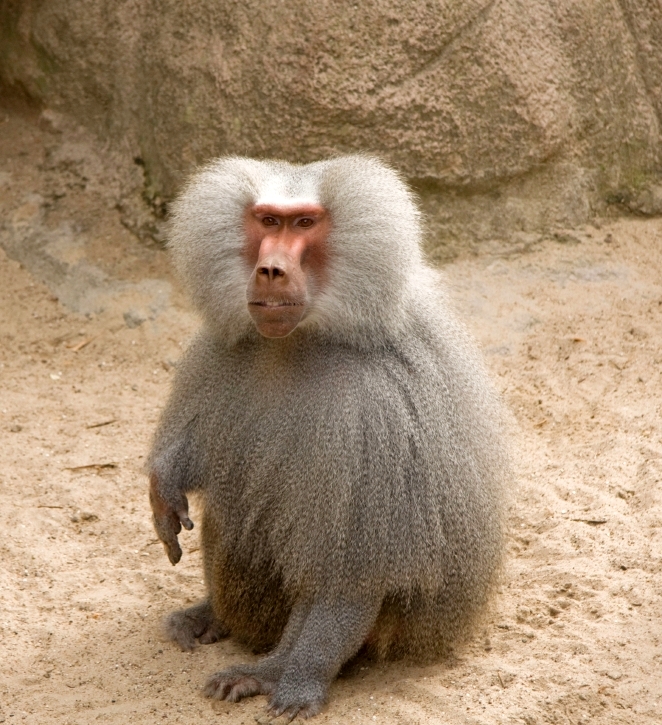
- Hamadryas Baboon - Papio hamadryas
- Guinea baboon - Papio papio
Where To Hunt Baboon
Baboon occur all over Africa but if you are a baboon connoisseur and want to hunt a specific baboon species, you will need to go to the following hunting countries...
- The olive baboon range stretches right across Africa in the equatorial zone. It can be hunted in Benin, Burkina Faso, Cameroon, CAR, Ethiopia, Tanzania and Uganda. In Ethiopia where the baboon ranges meet, the olive baboon frequently crossbreeds with the Hamadryas baboon and in Tanzania, the olive baboon crossbreeds with the chacma and yellow baboon.
- The yellow baboon range is from northern Tanzania, through to northern Mozambique, Zimbabwe, Zambia, South Africa and Botswana. The yellow baboon can be hunted in these countries but again they crossbreed where ranges meet.
- The chacma baboon range is across southern Africacan from Angola to Mozambique. It can be hunted in Botswana, Mozambique, Namibia, South Africa, Tanzania, Zambia and Zimbabwe. If you want to get very picky about your chacma baboon species, the Cape chacma is only found in South Africa. The grey-footed chacma is found in northern South Africa, Okavango in Botswana, Zimbabwe, Mozambique (south of the Zambezi) and southwest Zambia. The Ruacana chacma is found in northern Namibia (and southern Angola).
- The hamadryas baboon range is the north east Africa and can be hunted in Ethiopia only.
- The Gelada baboon are only found in the high grassland of the central Ethiopian plateau, which is the only place they can be hunted.
- The Guinea baboon is only found in Guinea, Senegal, Gambia, southern Mauritania and western Mali, so is not huntable.
Baboon Hunting Prices
Baboon are usually considered as animal of opportunity taken while hunting other game and the hunter is not too fussed about the species of baboon. They can be hunted on a straight daily rate + trophy fee hunt basis. In South Africa there is such a thing as an all-inclusive 'varmint' package hunt where you can take an unlimited number of baboons, plus other small animals, in a week.
If a baboon is one of your priority species to hunt, you might want to check out whether there are ample numbers of baboon in the hunt area, trophy fees and possible licence fees beforehand. Also you might like to check if you are hunting in South Africa, whether your outfitter will allow you to hunt as many baboons as you like, at no charge because they are are a particular nuisance on the property.
In many cases, hunting companies do not stipulate which species of baboon they are offering. Others do, so you might find difference in trophy fees between baboon species.
- In Tanzania, 1 yellow, olive or chacma baboon is available on all hunting licence lengths and the Government trophy fee is US$110 + the anti-poaching/community development fees.
- In Benin and Burkina Faso, the olive baboon trophy fees range from US$33 through to US$200.
- In Cameroon 1 olive baboon is available as a Group C savanna animal for trophy fees from 150 to 300 Euros.
- In CAR the olive baboon may be hunted in savanna areas for trophy fees from US$275 to US$450.
- In Uganda, the olive baboon is frequently hunted free of charge. Otherwise, trophy fees range from US$50 to US$290.
- In Ethiopia a gelada baboon trophy fee is around US$3000 and there is a limited annual quota of 20 trophies allowed. A hamadryas baboon is US$1000 and annual quota of 100 trophies allowed. An olive baboon trophy fee is about US$100 and annual quota of 100 allowed. You will need to check quota and pay a non-refundable licence fee before hunting a baboon in Ethiopia.
- In Mozambique a chacma or yellow baboon requires a non-refundable licence fee to be paid before the hunt starts. Baboon trophy fees may range from US$100 to US$400.
- In Zimbabwe a non-specific baboon trophy fee will range from US$50 to US$250.
- In Zambia a non-specific baboon trophy fee ranges from US$65 to US$200. Some companies quote the licence fee and trophy fee total, others only give a trophy fee, so it's worth checking if it is inclusive or not.
- In South Africa a baboon trophy fee will range from US$0 to US$400.
- In Botswana, a baboon trophy fee is in the range of US$120.
- In Namibia, a baboon trophy fee may be from US$50 to US$250.
Baboon Hunting Methods
- Except for the exotic-looking baboons of Ethiopia, they are best viewed as a target of opportunity.
- Often the first you might know of a chance at baboon is when you see the sentinel animal perched on the uppermost branches of a tree. If you hear him bark, he has probably spotted you which probably means you can spend an hour or two trying to out manoeuvre or out smart them. All those eyes and ears together and that high degree of craftiness, you're very possibly not going to succeed at this point. Alternatively, you can move on, try to find some more or tie up with them at bit later on.
- A couple of things that help the hunter is that baboons are curious and they don't like to pass up any opportunity. If you can stalk up to the troop and pick out a suitable animal to take, then that's great. If they start to get jumpy, one way to slow them down for a few seconds is to give them a quick whistle. An even better way is to give them a few squawks with a predator call - it will almost always make them stop and look.
A Good Baboon Trophy
- Any large male baboon would be considered a good trophy.
Baboon Hunting Shot Placement
- Baboon are similar to a human in physiology, so a chest shot will suffice.
Male Baboon Vital Statistics
- Shoulder Height: 26 - 36" / 66 - 91cm
- Weight: 70 - 135lbs / 32 - 61kg
Baboon Habitat and Requirements
- Baboons are found in nearly all African habitats and are extremely adaptable. They generally prefer semi-arid savannas with a good supply of water and safe sleeping places, either in tall trees or on rock faces.
Baboon Social Structure
- They are very social animals, live in groups (called troops) and have fairly complex social structures with very definite pecking orders.
- Although baboons are territorial, it must be remembered they usually have fairly large territories and are extremely mobile in those territories, so just because you saw them in one area today, it doesn't necessarily mean they'll be in the same place tomorrow.
Baboon Gestation Period
- After a gestation period of 6 months, one offspring is usually born.
Baboon Gender Identification
- The sexual organs of the male baboon are quite distinct and the males are considerably bigger than the females.
Baboon Gallery
Baboon Trophy Permits (2015)
| All Baboon Species | ||||||
CITES |
USF&W |
EU |
AUS |
|||
| CITES II Export Permit | CITES II Export Permit + CDC Permit (Raw trophy only) | Annex B | CITES II Export Permit | |||
Raw Baboon Trophy Import Into The USA
- If you are intending to import a raw baboon trophy (skull and/or skin) into the US, you will need to complete the CDC application form for Etiological Agent Import Permit.
- Go to Bringing Animal Products Into The United States for guidance on the application.
- Contact: Centers for Disease Control and Prevention, Mailstop A-46, 1600 Clifton Road, Atlanta, GA 30333 Tel: 404-718-2077 Fax: 404-718-2093 E-mail: importpermit@cdc.gov
- Raw baboon trophy products must be crated separately from other trophies for import into the US.
- Fully-treated, taxidermied mounts of baboons do not need this permit for importation into the US.
- If you are using a shipping agent, experienced with handling hunting trophies, he will usually take care of this permit on your behalf.
Baboon Trophy Taxidermy
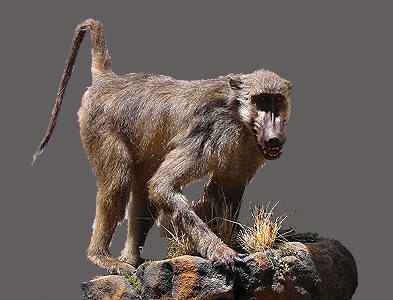
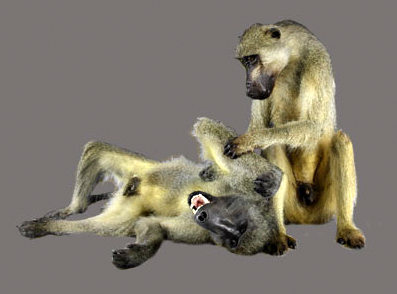
- Most hunters go for a full mount for their baboon trophy with or without surrounding habitat.
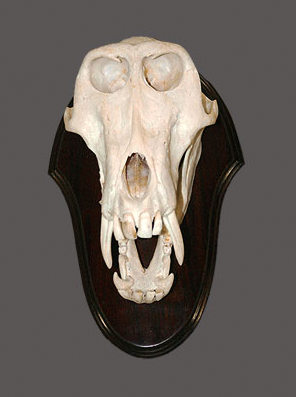
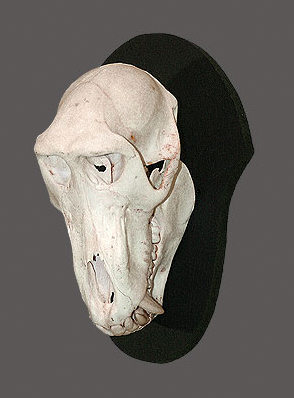
- Baboon skull mounts can also make very good displays.
Hunting Other African Animals
Big Five Hunting
Waterside Hunting
Other Plains Game Hunting
Spiral Horned Antelope Hunting
Large Antelope Hunting
Medium Antelope Hunting
Small Antelope Hunting
African Pig Hunting
Other Cat Hunting
Animals Of Opportunity
Home
>
African Game Animals
>
Baboon Hunting
Back to Top

Shakari Connection Bookshelf
Browse the Bookshelf mini-site for thousands of African hunting books and much more....

African Hunting Countries
- Hunting Benin Benin Travel
- Hunting Botswana Botswana Travel
- Hunting Burkina Faso Burkina Faso Travel
- Hunting Cameroon Cameroon Travel
- Hunting Central African Republic Central African Republic Travel
- Hunting Ethiopia Ethiopia Travel
- Hunting Mozambique Mozambique Travel
- Hunting Namibia Namibia Travel
- Hunting South Africa South Africa Travel
- Hunting Tanzania Tanzania Travel
- Hunting Uganda Uganda Travel
- Hunting Zambia Zambia Travel
- Hunting Zimbabwe Zimbabwe Travel
Hunting Gear For Africa
- Ammo Holders
- Flashlights / Torches
- Headlamps
- Other Light Gadgets
- Hearing Protectors
- Gaiters
- Personal Water Bottles
- Hydration Backpacks
European Hunting
African Travel For Hunters
- First Time To Africa?
- Money In Africa
- Travel Agents For Africa
- Airlines To Africa
- African Airports
- Airport Security Tips
- Tips For Packing Luggage
- Airline Baggage Allowances
- Airline Lost Baggage
- Jet-Lag Remedies & Longhaul Flight Survival
- Air Charters In Africa
- Visas & Passports
- Global Rescue
- Travel Insurance

African Hunter Magazine
African Game Animals
Miscellaneous Hunting Topics
- African Hunting Articles
- African Hunt Packing List
- Hunt Preparation Checklist
- African Trophy Photography
- African Hunting Seasons
- Weather In Africa
- African Moonlight
- Your African Hunt Stories
African Wildlife Art
Create Your Own Website

Affiliate Disclosure
Shakari Connection is a participant in the Amazon Services LLC Associates Program, an affiliate advertising program designed to provide a means for sites to earn advertising fees by advertising and linking to amazon.com
Visitors' Favourite Pages
|
|
|
|
|
| Double Rifles | Baboon Hunting | Safari Hats | Insect Repellents For Africa | African Hunter Shot Placement |


Copyright © 2008-2024. All rights reserved. No part of this website may be reproduced for publication without written permission.