African Explorer Books
These African explorer books are the true life tales of exploration, adventure and survival against all odds on the Dark Continent, that have inspired countless readers for generations.
After a quick scan of the African explorer books below, you'd be forgiven for thinking Africa was log-jammed with Victorians all competing to be the first to reach somewhere by fair means or foul.
When the African explorers returned home, they all wrote books about their hair-raising adventures which were incredibly popular bestsellers with the general public. They were, without doubt, the influential 'celebrities' of their time. Their public spats, discrediting each other's African 'discoveries', made headline news and divided public opinion.
Please note, this page contains affiliate links, which means Shakari Connection receives a commission if you make a purchase using these links.
Boyd Alexander
Boyd Francis Alexander (1873 - 1910) was a British Army officer, explorer and ornithologist.
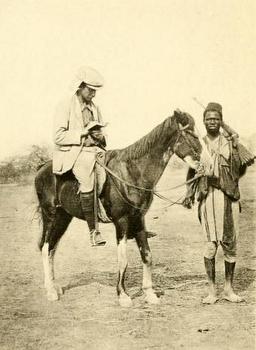
There is an interesting observation by W D M Bell in 'Bell Of Africa' about Boyd's skill at presenting a tranquil outward appearance when facing potentially dangerous and murderous natives. Being perfectly cool and preferably unarmed, apparently rather flummoxes them and defuses the situation. Bell put this into practice himself on many occasions but the strategy ultimately failed with Boyd Alexander.
From The Niger To The Nile by Boyd Alexander (1907). Two volumes providing great detail on the people, places and game encountered. Starting in West Africa (Chad and Niger River area) he endeavored to find a way east to the Nile River. He bagged a lion, had many adventures with elephants, rhino, buffalo and plains game. A really exciting as well as respected work of exploration and hunting. Vol I Free eBook Vol II Free eBook
Boyd Alexander's Last Journey by Boyd Alexander (1912) with a memoir by Herbert Alexander. Alexander was exploring in Cameroons, he climbed Mount Kamerun and journeyed on into French Central Africa where he was killed during the wars between the French and the Moslem rulers. Free eBook
William Allen & T R H Thomson
Rear-Admiral William Allen (1792 – 1864) was an English naval officer and explorer best known for having commanded the steamer HMS Wilberforce in the disastrous Niger expedition of 1841 under Captain Henry Dundas Totter who commanded the expedition.
Thomas Richard Heywood Thomson (1813 – 1876) was an English explorer and naturalist.
A Narrative Of The Expedition To The River Niger In 1841 by William Allen & T R H Thomson (1848) is a 2 volume account of The British Niger Expedition of 1841 which was commissioned by the British Government to perform two primary tasks - the suppression of the slave trade by negotiating anti-slavery treaties with local chiefs and to explore the course of the River Niger. However, so-called 'river fever' brought an untimely end to the expedition and it was abandoned. They used three British iron steam vessels to travel to Lokoja, at the confluence of the Niger River and Benue River, in what is now Nigeria. Of the 150 Europeans on the expedition, 42 died in 130 fever cases, despite the Royal Navy surgeons carrying quinine as a prophylactic against malaria. Free eBook Vol I Free eBook Vol II
Heinrich Barth
Dr Heinrich Barth (1821 – 1865), sometimes referred to as Henry Barth, was a German explorer of Africa and scholar. He was considered one of the greatest African explorers. Barth, Adolf Overweg (1822 – 1852) and James Richardson (1809 - 1851) went on a long expedition (1850 to 1855) across the Sahara to western Sudan and western Africa.
The deaths of Richardson and Overweg, who died of unknown diseases on the expedition, left Barth to carry on the scientific mission alone. Barth was the first European to visit Adamawa in 1851. When he returned to Tripoli in September 1855, his journey had extended from Tripoli in the north to Adamawa and Cameroon in the south, and from Lake Chad and Bagirmi in the east to Timbuktu in the west - more than 12000 miles. He studied the topography, history, civilizations, languages and resources of the countries he visited.
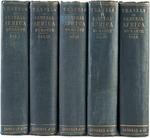
Travels And Discoveries Of North And Central Africa: Being A Journal Of An Expedition Undertaken Under The Auspices of H B M's Government, In The Years 1849-1855 by Heinrich Barth (1857) is a 5 volume account of the author's expedition with James Richardson to Lake Chad. Departing from Tripoli, this was one of several expeditions designed to disrupt the slave trade by way of promoting legitimate commerce. On Richardson's death in March 1851, Barth assumed leadership of the expedition and became the first European to visit Adamawa. It includes detailed notes on economics, linguistics, topography and cultural history. The books/volumes were published in several editions in different years and with slightly different titles. Free eBook Vol I Free eBook Vol II Free eBook Vol III Free eBook Vol IV Free eBook Vol V
Alfred Bertrand
Alfred Bertrand (1856 - 1924) was a Swiss army officer who joined an expedition headed by Alfred St.Hill Gibbons to the interior of Barotseland.
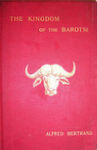
The Kingdom of the Barotsi, Upper Zambezia: A Voyage Of Exploration In Africa, Returning By The Victoria Falls, Matabeleland, the Transvaal, Natal And The Cape by Alfred Bertrand (1898) are detailed accounts of the journey taken from the author's diary, with special attention paid to the terrain and natives of the region. Nearing the rivers Machila and Zambesi, the author bagged buffalo, wildebeest and lion. Free eBook
James A Bradbury
Daring Deeds In The Tropics by James A Bradbury (1894) is subtitled...'A thrilling narrative of remarkable adventures, terrible experiences, amazing achievements and important discoveries of great travelers in southern climes'. The books includes much detail on the adventures of Stanley and Livingstone. Free eBook
Charles Bruce
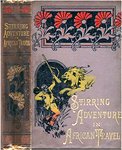
Stirring Adventures In African Travel by Charles Bruce (1890) includes chapters on famous explorers, such as Livingstone, Du Chaillu and Captain Speke. Also chapters on hunting elephant, buffalo and rhinoceros and a chapter describing the shipwreck and captivity of past sailors. Free eBook
Graphic Scenes In African Story: Settlers, Slavery, Missions And Missionaries, Battle-Fields by Charles Bruce (1888) Free eBook
Round Africa: Being Some Account Of The Peoples And Places Of The Dark Continent by Charles Bruce (1882) Free eBook
The Book Of Adventure And Peril: A Record Of Heroism And Endurance On Sea And Land by Charles Bruce (1898)
J W Buel
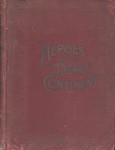
Heroes Of The Dark Continent: And How Stanley Found Emin Pasha by J W Buel (1889) is a complete history of all the great explorations and discoveries in Africa. It includes an account of Stanley's famous relief of Emin Pasha and all the other great travellers, hunters and explorers.
William J Burchell
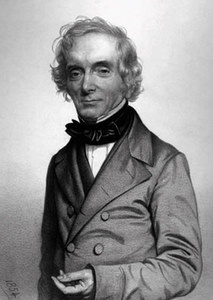
William John Burchell (1781 - 1863) was an English explorer, naturalist, traveller, artist and author. Burchell travelled in South Africa between 1810 and 1815 and his collection of plants, skins, skeletons, insects, seeds, bulbs and fish is considered to be the most extensive ever made in Africa, before or since. After his death by suicide, the bulk of his plant specimens went to Kew and the insects to Oxford University Museum. He is known for the copious and accurate notes he made to accompany every collected specimen, detailing habit and habitat, as well as the numerous drawings and paintings of landscapes, portraits, costumes, people, animals and plants. He was the first to describe the white rhinoceros and several birds are named after him but he is best known for Burchell's zebra, Equus quagga burchelli.
Travels In The Interior Of Southern Africa by William J Burchell (1822-1824). 2 Volumes. This is an account of Burchell's travels in South Africa between 1810 and 1815 making one of the greatest scientific explorations of his day. He collected over 50,000 specimens and covered over 7000 km, much of which was over completely unexplored terrain. Vol I Free eBook Vol II Free eBook
John Lewis Burckhardt
Johann Ludwig (aka John Lewis, Jean Louis) Burckhardt (1784 – 1817) was a pioneering Swiss explorer, geographer and Orientalist who is especially remembered for his rediscovery of the lost city of Petra. After studying in Germany, he travelled to England in 1806, took employment with the African Association and got involved with the expedition to discover the Niger river course. The expedition called for an overland journey from Cairo to Timbuktu. To prepare for the journey, he attended Cambridge University and studied Arabic, science and medicine. He also began wear Arabian costumes and when he travelled travelled to Aleppo, Syria to perfect his Arabic, he took an Arabic name to disguise his European identity. After 2 years in Aleppo, he started out for Cairo, via Damascus, Ajloun and Amman - during which, in 1812, he became the first European to lay eyes on the ancient city of Petra.
After reaching Cairo and waiting 4 months for a westbound caravan to cross the Sahara, towards the Niger river, Burckhardt decided to journey up the Nile River to Upper Egypt and Nubia. After this he took a side trip to Mecca before returning to Cairo in 1815, still to wait for a westbound caravan. However, he got sick with dysentery and died in Cairo in 1817, never having made his intended journey to the Niger. Due to his Arabic disguise, he was buried as a Muslim, and his grave bears his assumed Arabic name.
Travels In Nubia by John Lewis Burckhardt (1819) is the posthumous account of the author's exploration. He left Aleppo in 1812 and made his way to Cairo - he then carried out two journeys, one along the upper Nile and the other through the Nubian desert.
René Caillié
Auguste René Caillié (1799 – 1838) was a French explorer and the first European to return alive from Timbuktu. He A British officer, Major Gordon Laing, did get to Timbuktu before Caillié but he was murdered in 1826 when leaving the the town. Caillié was therefore the first to return alive. The next European to get to Timbuktu was Heinrich Barth. Caillié's expedition was to be different to the usual large-scale expeditions. He spent years learning Arabic, studying the customs and Islamic religion before setting off with a companion and later on his own, travelling and living as the natives did. His opinion of Timbuktu was very different from that of Laing, who described it as a wondrous city. Caillié found it to be a small, unimportant and poor town with no hint of the fabled reputation that had preceded it.
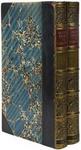
Travels Through Central Africa To Timbuctoo: And Across The Great Desert To Morocco, Performed In The Years 1824-1828 by Rné Caillié (1830) 2 Volumes. The author accompanied Gray's expedition in 1818 and lived with the Senegalese in 1824. In 1827 he travelled from Sierra Leone, reached the Niger and followed it to Kabara, the port of Timbuktu.
Hermenegildo Capello & Roberto Ivens
Hermenegildo de Brito Capello (1841 - 1917) was an officer in the Portuguese Navy and a Portuguese explorer, helping to chart territory between Angola and Mozambique in southern Central Africa that was unknown to Europeans in the 1870s and 1880s. Alongside Roberto Ivens, he is famous for being the first European to cross Central Africa from coast to coast between Angola and Mozambique.
Roberto Ivens (1850 - 1898) was a Portuguese explorer of Africa, geographer, colonial administrator and an officer of the Portuguese Navy.
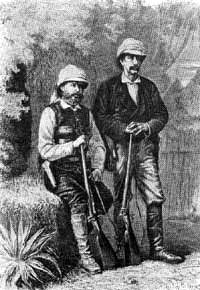
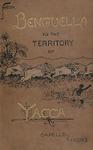
From Benguella To Territory Of Yacca: Description Of A Journey Into Central And West Africa. by H Capello & R Ivens (1882) 2 Volumes. The authors were officers of the Royal Portuguese Navy, exploring between 1877 and 1880. This expedition attempted to explore and claim the lands between Portuguese colonies Angola and Mozambique. Free eBook Vol 1 Free eBook Vol 2
Gaetano Casati
Gaetano Casati (1838 - 1902) was an Italian explorer of Africa. Casati arrived in Africa in 1880 and was the first European to see the Ruwenzori Mountains. He was with Emin Pasha when Henry Morton Stanley arrived in 1888.
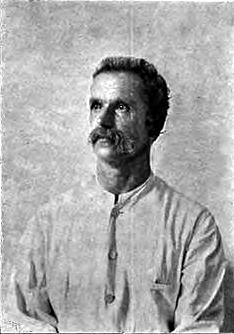
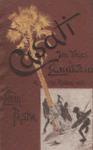
Ten Years In Equatoria And The Return With Emin Pasha by Gaetano Casati (1898) is a detailed 2 volume narrative, complete with plates and maps. Vol I Free eBook Vol II Free eBook
Charles Catania
Andrea De Bono (1821 – 1871) was a Maltese trader and explorer who was one of the first Europeans to explore the area around the White Nile in the mid-19th century. After emigrating to Cairo, and later, Khartoum in the Sudan, where he traded ivory, De Bono started exploring the Nile. He was the first European to explore the Sobat River tributary of the White Nile, reaching the cataracts beyond Gondokoro. He later reached Lake Albert and the Semliki River and made a 300 mile (480 km) journey to the mouth of the Sobat in 1854 – 1855 with his wife and his son.
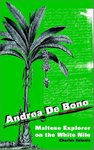
Andrea De Bono: Maltese Explorer On The White Nile by Charles Catania (2002) is the story of the Maltese explorer, Andrea De Bono, who spent almost twenty years travelling, exploring and trading near the White Nile. It is suggested in this book that De Bono could have become the first European to discover the source of the White Nile - at one time being just a few miles away from the source.
James Chapman
James Chapman (1831 - 1872) was an explorer of southern Africa, hunter, trader and photographer. In 1853 he explored the Zambezi river and almost beat David Livingstone to the Victoria Falls. Chapman was going to accompany Livingstone as a photographer but they had a disagreement and he did not go. By 1854 he had teamed up with Samuel H Edwards and launched an expedition to Lake Ngami. From 1860 to he set out on an expedition with his brother Henry and Thomas Baines to explore the Zambezi from the Victoria Falls down to its delta, to test its navigability. They did reach the Zambesi but did not get to explore the mouth of the river. Chapman's zebra, Equus quagga chapmani, found south of the Zambezi in Mozambique and Zimbabwe, was named after him. In Botswana is a very large tree that goes by the name 'Chapman's Baobab' which he named after himself. It is reputed that other explorers including Selous and Livingstone have camped under this very tree. It is also reputed to be the largest tree in Africa, 25m in girth and between 4000 and 6000 years old. Sadly this tree fell on the 17 January 2016.
Travels In The Interior Of South Africa: Comprising Fifteen Years' Hunting And Trading With Journeys Across The Continent From Natal To Walvish Bay, And Visits To Lake Ngami And The Victoria Falls by James Chapman (1868) These volumes embody the results of observations in regions seldom visited. Vol I Free eBook Vol II Free eBook
Robert E Cheesman
Robert Ernest Cheesman (1878 - 1962) was HM Consul in North-West Abyssinia from 1925 to 1934 and led a surveying expedition that finally fixed the source and course of the Blue Nile from Lake Tana.
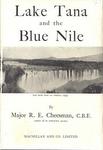
Lake Tana And The Blue Nile: An Abyssinian Quest by Robert E Cheesman (1936) is an account of his expedition to Lake Tana in the course of which he became the first European to visit all the islands on Lake Tana. He also made the first journey from the Lake down the Blue Nile through entirely unexplored country to the furthest point reached by expeditions which had entered Abyssinia from the Sudan.
In Unknown Arabia by Major R E Cheesman (1926) is the account of the author's journey into the Arabian Peninsula in 1923. He collected over 300 specimens from the Hasa oasis, several of them previously unknown to science. He was also the first man to map part of the Arabian coast.
Captain Hugh Clapperton
Bain Hugh Clapperton (1788 - 1827) was a Scottish naval officer and explorer of West and Central Africa. His first expedition in Africa was to reach Bornu, Nigeria from Tripoli in 1822 with Walter Oudney and later, Dixon Denham.
Immediately after his return to England in 1825, Clapperton was raised to the rank of commander and sent on his second journey to the Niger river due to the sultan Bello of Sokoto having professed his eagerness to open up trade with the west coast. In July, Clapperton arrived at Kano and later the Fulani capital Sokoto, intending to continue to Bornu and renew his acquaintance with the Kanuri leader Sheikh al-Kaneimi. However, the Fulani were now at war with al-Kaneimi, and Sultan Bello refused him permission to leave. After many months of detention, afflicted by malaria, depression and dysentery, Clapperton died, leaving his servant Richard Lander the only survivor of the expedition.
Journal Of A Second Expedition Into the Interior Of Africa, From The Bight Of Benin To Soccatoo. To Which Is Added, The Journal Of Richard Lander From Kano To The Sea-Coast, Partly By A More Eastern Route by Captain Hugh Clapperton & Richard Lander (1829) recounts Clapperton's second expedition to Africa. Clapperton came out on HMS Brazen, which was joining the West Africa Squadron for the suppression of the slave trade. He landed at Badagry in the Bight of Benin, and started overland for the Niger in December 1825, having with him his servant Richard Lemon Lander, Captain Pearce, and Dr Morrison, navy surgeon and naturalist. Before the month was out Pearce and Morrison were dead of fever. Clapperton continued his journey, and, passing through the Yoruba country, in January 1826 he crossed the Niger at Bussa, the spot where Mungo Park had died twenty years before. Free eBook
Narrative of Travels and Discoveries In Northern And Central Africa In The Years 1822, 1823, And 1824 by Captain Hugh Clapperton, Major Dixon Denham & Dr Walter Oudney (1826) is the account of Clapperton's first African expedition, in the company of Dixon Denham and Dr Walter Oudney. They travelled from Tripoli, almost due south to Lake Tchad, with excursions into the mountains west of Mourzuk in Fezzan. Dixon attempted to follow the circuit around Lake Tchad but was unsuccessful. In the meantime, Clapperton and Oudney journeyed west from the lake toward the Niger River, but the doctor only made it about a third of the way and died in Murmur. Clapperton continued west, but was prevented from passing beyond Sackatoo by the local Sultan. He and Denham subsequently returned to Tripoli and crossed back to England This narrative is compiled primarily from Denham's journal, with a chapter by Dr. Oudney on the excursion to the mountains west of Mourzuk. A final section by Clapperton relates the westward journey from Lake Tchad to Sackatoo and includes an account of Oudney's death. Free eBook Volume I | Free eBook Volume II
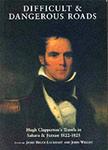
Difficult And Dangerous Roads: Hugh Clapperton's Travels In Sahara and Fezzan, 1822-1825 by Hugh Clapperton, edited by Jamie Bruce-Lockhart & John Wright (2000) is the first publication of Hugh Clapperton's journals which were discovered in South Africa. They show him to be one of the most sensitive and sympathetic travellers, his observations untainted by any sense of moral superiority. Hugh Clapperton had a sharp eye for detail and a gift for friendship and delighting in the company of both dignified tribal sheikhs and fearsome renegades.
Robert Cochrane
Lives And Discoveries Of Famous Travellers by Robert Cochrane (1883) includes the lives and travels of Samuel W Baker, David Livingstone, Henry Morton Stanley and Serpa Pinto. Free eBook
Sir Reginald Coupland
Sir Reginald Coupland 1884 - 1952) was a prominent author and historian of the British Empire between 1920 and 1948.
Sir John Kirk (1832 - 1922) was a Scottish physician, naturalist and companion to explorer Dr David Livingstone. He was an avid specimen collector with several species of plants and animals named after him such as Kirk's dik-dik which he found in east Africa.
Kirk On The Zambesi by Sir Reginald Coupland (1928) is an an account of the Zambesi Expedition of 1858-63. The book is based mainly on the daily journal kept by Sir John Kirk, Livingstone's lieutenant on the Expedition. It contains much material which was not given to the public in Livingstone's description. Kirk was one of the first explorers to carry a camera and the book is illustrated from his own photographs".
Hugh Craig
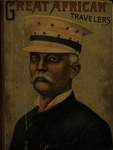
Great African Travellers by Hugh Craig (1890) is a late 19th-century work outlining the voyages and expeditions of the most famous and iconic African explorers. Written and collected by Hugh Craig, this book includes descriptions of the lives and journeys of David Livingstone, Mungo Park, René Caillié, Henry Stanley, among others. this book also features illustrations of local tribes, canoes and ships, wild animals and hunts and natural landscapes.
Norman J Davidson
Modern Exploration, Sport And Travel: A Record Of Adventure, Exploration & Sport In All Parts Of The World, Derived From Personal Accounts By The Explorers, Travellers & Sportsmen by Norman J Davidson (1921)
The Romance Of Missionary Pioneers by Norman J Davidson (1900)
The Romance Of Modern Pathfinders by Norman J Davidson (1925). Interesting descriptions of exploration, adventure & sport in all parts of the world from accounts by the pioneers themselves.
Moffat Of Africa: A Zealous Missionary And A Brave Pioneer by Norman J Davidson (1926) is an account of the life of Robert Moffat (1795 - 1883) who was a Scottish Congregationalist missionary to Africa and father-in-law of David Livingstone.
Modern Travel: A Record Of Exploration, Travel, Adventure And Sport In All Parts Of The World During The Last Forty Years Derived From Personal Accounts From The Travellers by Norman J Davidson (1921) Free eBook
I N Dracopoli
Ignatius Nicolas Dracopoli (1887 - 1923) was born in France of Italian extraction, educated in England, became a cowboy in Arizona and then set out in 1910 with his brother for his first big game hunting safari in British East Africa.
He had always wanted to be an explorer and on subsequent expeditions to BEA, he mapped the Lorian Swamp region. His expedition met and passed the Edward Bennet safari on the way from Kismayu.
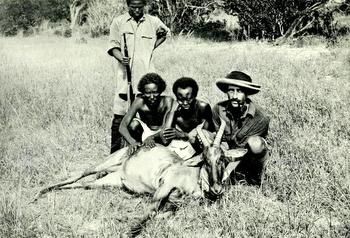
Through Jubaland To The Lorian Swamp: An Adventurous Journey Of Exploration & Sport In The Unknown African Forests & Deserts Of Jubaland To The Unexplored Lorian Swamp by I N Dracopoli (1914) Free eBook
British Sports And Sportsmen: Big Game Hunting And Angling (1914) is a sumptuous compendium of articles which include 'Big Game Hunting in Africa' by F C Selous, 'Elephant Hunting in German East Africa' by James Sutherland. Ignatius Dracopoli contributed Chapter 7 on Sonoran Big Horn and Hunter's Hartebeest.
A E Filby
Archibald Edmund Filby was a British explorer, dubbed the 'world's most travelled motorist'.
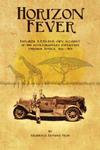
Horizon Fever: Explorer A E Filby's Own Account Of His Extraordinary Expedition Through Africa, 1931 - 1935 by A E Filby (2015) is a posthumous account of A E Filby's life and expeditions, including his 37,000 mile journey from London to Cape Town and back in a series of dilapidated motor cars which took 4 years. It includes tales of missionaries, pygmies, big-game hunting, gold-mining, crossing the Sahara and swimming in the Nile with crocodiles.
Filippo De Filippi
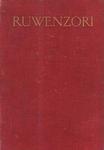
Ruwenzori: An Account Of The Expedition Of HRH Prince Luigi Amedeo Of Savoy, Duke Of The Abruzzi by Filippo De Filippi (1908). The mountain range of Ruwenzori is believed to be the mythical mountains of the Moon referred to by Ptolemy. Located in central Africa, these snowy mountains drain into the lakes that feed the Nile making them the true source of the great river. Perpetually shrouded in mists, Stanley and other explorers thought, upon first sight of the mountains, that they were simply a trick of the eye. Many explorers had tried to ascend these peaks but had never succeeded. The Duke's expedition was the first to truly explore and document the range after nearly half a century of speculation, setting in place the final piece of the Nile puzzle. This successful expedition climbed all the major mountain peaks. Free eBook
Sir Francis Galton
Sir Francis Galton (1822 - 1911) was an English tropical explorer, geographer, inventor, meteorologist amongst many other talents. In 1845 and 1846 he went to Egypt and travelled down the Nile to Khartoum in the Sudan, and from there to Beirut, Damascus and down the Jordan. In 1850 he joined the Royal Geographical Society, and over the next two years mounted a long and difficult expedition into then little-known South West Africa (now Namibia). He probably is best known for devising a method for classifying fingerprints that proved useful in forensic science.
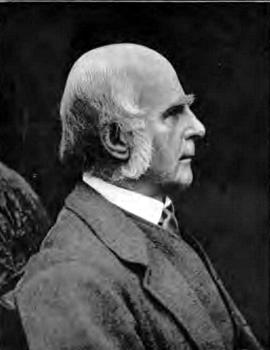
Narrative Of An Explorer In Tropical South Africa by Sir Francis Galton (1856) is an account of a his expedition to Damaraland in 1851. Free eBook
The Art Of Travel: Or Shifts And Contrivances Available In Wild Countries by Sir Francis Galton (1893) is his bestselling handbook of practical advice for the Victorian on the move.
Romolo Gessi
Romolo Gessi (1831 - 1881) was an Italian soldier and an explorer of north-east Africa, especially Sudan and the Nile River. He was also known as Romolo Gessi Pasha - 'Pasha' being an honorary title typically granted to governors, generals, dignitaries and others. After serving with Major-General Charles Gordon as a translator during the Crimean War, he also served for him in the Sudan while exploring the course of the upper Nile. Gordon then instructed Romolo Gessi to crush slave trader insurrections. Following his campaign against the slavers, for which he earned the title of 'Il Flagello degli schiavisti' (The Scourge of the slavers), Gessi became Governor of Bahr-el-Ghazal.
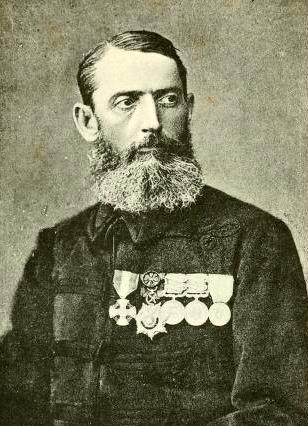
Seven Years In The Soudan: Being A Record Of Explorations, Adventures And Campaigns Against The Arab Slave Hunters by Romolo Gessi Pasha (1892) Edited by Felice Gessi, the author's son. Is the account of Gessi's explorations in Sudan and the upper Nile. There are some elephant and buffalo hunting adventures. Free eBook
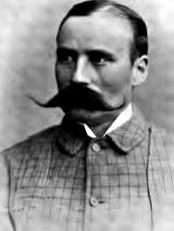
Major Alfred St.Hill Gibbons
Major Alfred St.Hill Gibbons (1858 - 1916) was an explorer, naturalist and big game hunter. He is best known for his expeditions in the upper Zambezi region and was reputed to be the second person to cross Africa from the Cape to Cairo.
Africa: From South To North Through Marotseland by Alfred St.Hill Gibbons (1904). 2 Volumes. Captain Gibbons hunted in Barotseland for about ten months and he gives a full description of the regions of the Upper Zambesi, together with an account of the Marotse, Matoka and Mashikolumbwe people. These volume contains many views of the country and of the Victoria Falls, together with illustrations of many hunting scenes. Vol I Free eBook Vol II Free eBook
Exploration And Hunting In Central Africa 1895-96 by Alfred St.Hill Gibbons (1898) is an account of the author's journey up the Zambesi into Barotseland and into the country of the Marotse. He describes the region, with attention paid to the area around Lake Victoria, Gibbons relates episodes of hunting buffalo, lion, roan, eland, hartebeest and wildebeest in the region. Free eBook
A Record Journey In Savage Africa by Alfred St.Hill Gibbons (1901) is a three part article of an account of a journey from the North to the South and the East to the West of Africa in more than 2 years and 20,000 miles.
British East African Plateau: Land And Its Economic Conditions by Alfred St.Hill Gibbons (1906) is a Royal Geographic Journal article.
A Journey In The Marotse And Mashikolumbwe Countries by Alfred St.Hill Gibbons (1897) is a Royal Geographic Journal article.
J A Grant
James Augustus Grant (1827 - 1892) was a Scottish explorer of eastern equatorial Africa. In 1860 he joined John Speke in the expedition which solved the problem of the Nile source. Speke was the leader, but Grant carried out several investigations independently and made valuable botanical collections.
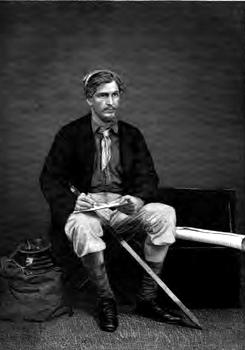
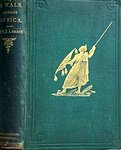
A Walk Across Africa: Or Domestic Scenes From My Nile Journal by J A Grant (1864) was published, as supplementary to Speke's account of their journey. Grant deals particularly with "the ordinary life and pursuits, the habits and feelings of the natives" and the economic value of the countries traversed. Free eBook
Book about J A Grant:
Roy Bridges
Earlier accounts of the 1860 - 1863 Nile Expedition have assumed James Augustus Grant to have been no more than the loyal second-in-command to John Hanning Speke, the leader. Now, Grant emerges as a much more impressive and important figure than has previously been recognised. He was a trained scientist and his narrative is a well-organised perspective on the expedition and its activities. His own growing understanding of Africa and of Africans becomes apparent and helps to explain his later activities.The editor provides a context to the expedition and its results and this includes a new approach to the understanding of the Nile source problem.
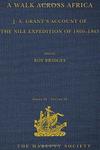
A Walk Across Africa: J A Grant's Account Of The Nile Expedition Of 1860 - 1863 edited by Roy Bridges (2018) provides the opportunity to re-examine the role of James Augustus Grant in this Nile expedition with Speke. The original text of Grant's book 'A Walk Across Africa' has been fully annotated with explanatory notes and also supplemented by extracts from Grant's very detailed day-to-day journal and extensive collection of his papers. This edition also includes reproductions of the whole visual record which Grant made consisting of 147 watercolours and sketches - these would be the first ever visual records of large parts of East Africa and the Upper Nile Valley region.
J W Gregory
John Walter Gregory (1864 - 1932) was a British geologist and explorer, known principally for his work on geology of Australia and East Africa. In 1887 he became an assistant in the geological department of the Natural History Museum, London.
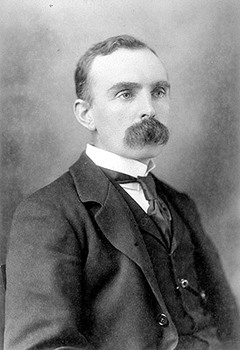
The Foundation Of British East Africa by J W Gregory (1901) Free eBook
The Great Rift Valley: Being The Narrative Of A Journey To Mount Kenya And Lake Baringo by J W Gregory (1896) is an account of an expedition undertaken in 1892-93 into the eastern part of what was then known as British East Africa and a comprehehsive natural history of the area, written when very little was known about the area. Free eBook
Ewart S Grogan & Arthur H Sharp
Ewart Scott Grogan (1874 - 1967) was a British explorer, politician, entrepreneur and the first person to walk the length of Africa from Cape Town to Cairo in 1899. His brother Quentin, was Roosevelt's white hunter on the Lado Enclave leg of the safari.
During the Matabele War Grogan had walked the first leg from Cape Town to Beira, Rhodesia. Two years later, Arthur Henry Sharp accompanied Grogan to Beira and in February 1898 they started the 4,000-mile second leg to Cairo. At Lake Ruisamba, later named Lake George, Sharp finished the walk and returned home.
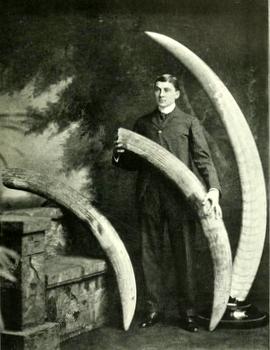
From The Cape To Cairo: The First Traverse Of Africa From South To North by Ewart Grogan & Arthur H Sharp (1900) is a highly regarded and important work of travel and adventure throughout Africa. The men trekked on foot from the Cape to Cairo in order to prove that Africa could be traversed by rail. Free eBook
Books About Ewart S Grogan:
Edward Paice
Lost Lion Of The Empire: The Life Of 'Cape-To-Cairo' Grogan by Edward Paice (2001) is a powerful account both of the life of Ewart Grogan and the birth of Kenya as a country. In order to win the hand of Gertrude Coleman, he needed to prove himself to her father. He did so by announcing that he intended to accomplish the first south-to-north traverse of Africa. In 1900, after two years of illness and extreme hardship, he arrived triumphantly in Cairo. He became an instant celebrity and married Gertrude. They eventually settled in East Afric and he became a leader among the settlers in Kenya.
Norman Wymer
Norman George Wymer (1911 - 1982) was a British journalist who became a prolific author and biographer. His mother was Margaret Grogan, a sister of Ewart Grogan, of Cape to Cairo fame.
The Man From The Cape: The First Trek From Cape To Cairo by Norman Wymer (1959) is the unusual biography of Ewart Grogan written by his nephew. It is the story of pioneering adventure - Ewart Grogan was the first person to make the hazardous trek from the Cape to Cairo. The author has vividly described Grogan's career that brought him into contact with Queen Victoria, Cecil Rhodes, Joseph Chamberlain, Winston Churchill, Ernest Bevin, Woodrow Wilson and William Randolph Hearst and many other personalities.
Julian Smith
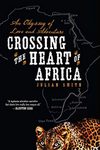
Crossing The Heart Of Africa: An Odyssey Of Love And Adventure by Julian Smith (2010) is the story of the author's attempt to retrace the journey of the British explorer Ewart Grogan, the first man to cross the length of Africa on foot. Grogan did the journey in hopes of impressing the father of the woman he wanted to marry. In 2007, the American journalist author faced a similar problem with his girlfriend and decided to address it in the same way as Grogan. So he retraced Grogan's 4500 mile journey through the lakes, volcanoes, savannas and modern cities of Africa.
Gianni Guadalupi
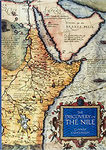
The Discovery Of The Nile by Gianni Guadalupi (1997). It was not until the middle of the 19th century, after centuries of being the world's greatest geographic enigma, that the mystery of the Nile was solved through the efforts of British explorers Richard Burton, John Hanning Speke, James Augustus Grant and Samuel Baker White. This lavish volume tells their stories and those of other adventurers.
A J Hayes
Arthur J Hayes a British medical officer working in Egypt who accompanied an expedition to survey the water supply of Lake Tsana, now Lake Tana, which was the source of the Blue Nile. Travelling from Khartoum, through the Abyssinian Highlands, the expedition proceeded eastwards round the lake until they reached the Blue Nile exit point in the south.
The Source Of The Blue Nile by A J Hayes (1905) recounts his voyage through Abyssinia during 1902-3. "A Record of a Journey Through the Soudan to Lake Tsana in Western Abyssinia, and of the Return to Egypt by the Valley of the Atbara With a Note on the Religion, Customs, Etc; Of Abyssinia." Free eBook
Captain C Wightwick Haywood
Captain Cecil Walter Inglefield Wightwick Haywood (b.1876) was the district commissioner of Jubaland (at the time part of BEA, now Somalia) and was asked to undertake an expedition from Kismayu to the Lorian Swamp to find a route to link to the Nyeri-Nairobi route in 1912.
To The Mysterious Lorian Swamp: An Adventurous & Arduous Journey Of Exploration Through The Vast Waterless Tracts Of Unknown Jubaland by C Wightwick Haywood (1927) is a exciting account of his journey which included being charged by lion. Ignatius Dracopoli's expedition followed Haywood's from Jubaland to Lorian Swamp keeping on the bank of Laka Dera.
The Bajun Islands And Birikau: A Visit By The Then British Political Officer Responsible For The Administration Of Jubaland by C Wightwick Haywood (1935) is a Royal Goegraphical Society Journal article.
Joel Tyler Headley
Joel Tyler Headley (1813 - 1897) was an American clergyman, historian, author, newspaper editor and politician who served as Secretary of State of New York.
Great Explorations In The Wilds Of Africa by Joel Tyler Headley (1886) 'including Sir Samuel Baker's expedition with a force of nearly two thousand men to suppress the slave trade; Lieut. Cameron's Across Africa, with these travelers' marvelous accounts of fighting the natives, hunting the hippopotamus, elephant and lion, and Henry M Stanley's story of his last and greatest work and explorations in organizing and bringing into the family of nations the Congo Free State, with a graphic account of Chinese Gordon in Africa.' Free eBook
Anne Hugon
The Exploration Of Africa: From Cairo To The Cape by Anne Hugon (1993). Burton, Speke, Grant, Baker, Kingsley - in the space of barely fifty years these extraordinary men and women travelled to the sources of the Nile and tracked the course of the Congo and Zambezi. Yet their achievements led to commercial exploitation and ruthless colonization. Here are physical horrors endured, euphoric success and the dramatic consequences of a momentous meeting of cultures.
Wendy James, Gerd Baumann, Douglas H Johnson & Juan Maria Schuver
Juan Maria Schuver (1852 - 1883) was born into a wealthy Amsterdam business family. He became a travel writer and later decided to embark on a scientific exploration. Leaving Cairo at the turn of 1880-1881 he proceeded up the Blue Nile, intending to find a new route through to the East African coast. This ambition was frustrated, mainly because of local political turbulence following the Mahdist challenge to the Sudanese government and internal stirrings in Abyssinia. As a result, Schuver remained for the better part of two years in the hills of the upper Blue Nile and the eastern watershed of the White Nile basin. He wrote lively accounts of these regions and his encounters with the local people. He had to return to Khartoum at the end of 1882, but took a steamer up the White Nile in the middle of 1883. He ignored advice not to travel further southwards overland and was murdered, a few days into western Dinka country.
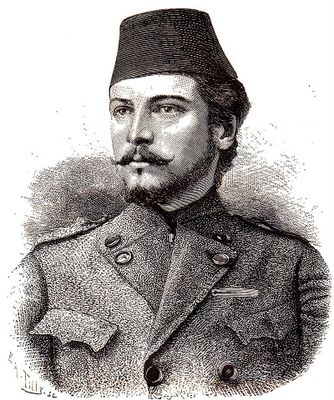
Juan Maria Schuver's Travels In North East Africa 1880-1883 by Wendy James, Gerd Baumann, Douglas H Johnson & Juan Maria Schuver (1996). Schuver had planned books in both English and French on his explorations in the country 'Between the Two Niles'. The only version which saw publication was an edited German translation. By combination of chance, the present editors' interest in the region, and the collaboration of the Schuver family led to the re-discovery of the original manuscripts. This book offers the English accounts supplemented by passages from the author's French revisions, and also draws on other drafts and letters, to give for the first time a full picture of Schuver's African travels.
Richard Jobson
Richard Jobson was a 17th century English explorer who in 1620 sailed to Guinea, west Africa and travelled 400 miles up the Gambia River to trade for gold.
The Golden Trade Or A Discovery Of The River Gambra, And The Golden Trade Of The Aethiopians by Richard Jobson (1623) (First reprint edition 1904). It is one of the earliest English protests against the African slave trade. Jobson provides a fascinating description of the life and manners of the West African native peoples. He relates the story of the second voyage to the Gambia undertaken for 'The Company of Adventurers of Africa Trading into Africa', under a charter granted by King James I in 1618. It is a remarkably detailed description of African culture, living conditions and rituals at a time when the interior was largely unknown. This is probably the first separate English account of a travel to the interior of Africa.
Dr Wilhelm Junker
Dr Wilhem Junker (1840 - 1892) charted the course of the Congo and its tributaries during his decade in Central Africa. Born of German parents in Moscow, he was influenced in his desire to explore Africa by Schweinfurth who drew his attention to the lands south of the Libyan desert, still shrouded in the veil of mystery. His fascination with the region led him to make three expeditions over a period of eleven years and he is recognised as one of the great African explorers. Junker remained almost continuously in eastern Equatorial Africa from 1875 to 1886, making first Khartoum and afterwards Lado the base of his expeditions. Junker was a leisurely traveller and a careful observer; his main object was the study the peoples with whom he came into contact and to collect specimens of plants and animals. Perhaps the greatest service he rendered to geographical science was his investigation of the Nile-Congo watershed, when he successfully debunked Georg Schweinfurth's hydrographical theories and established the identity of the Welle and Ubangi rivers.
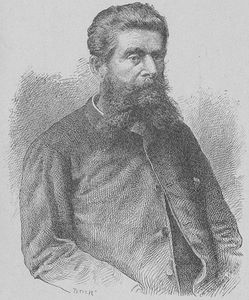
Travels In Africa During The Years 1875-1878 [And] 1879-1883 [And] 1882-1886 by Dr Wilhelm Junker (1890 to 1892) Vol I Free eBook Vol II Free eBook Vol III Free eBook
Theo Kassner
Theo Kassner was a geologist and explorer and the purpose of his journey was to prospect the area through which the Cape to Cairo railway was to run.
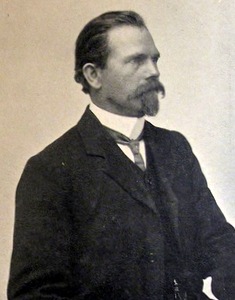
My Journey From Rhodesia To Egypt: Including An Ascent Of Ruwenzori And A Short Account Of The Route From Cape Town To Broken Hill And Lado To Alexandria by Theo Kassner (1911) Free eBook
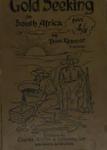
Gold Seeking In South Africa: A Handbook Of Hints For Intending Explorers, Prospectors And Settlers by Theo Kassner (1902) is a textbook of practical prospecting in South Africa. The book is quite rare as it was a standard work used by practical miners and prospectors and thus few survived the rigours of daily use. Free eBook
W J Harding King
William Joseph Harding King (1869 - 1933) was a British explorer who travelled extensively in the north African deserts. In 1900 and 1908 he was in the Western Sahara and in 1909-12 he explored the central portions of the Libyan Desert.
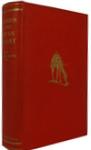
Mysteries Of The Libyan Desert: A Record Of Three Years In The Heart Of That Vast & Waterless Region by W J Harding King (1925) is an account of King's 3 years of exploration from 1909 to 1912. He made several camel trips out of Dakhla Oasis, reaching 'Two Peaked Hill' some 200 km to the South West of Dakhla in 1909. In 1911 He attempts to go further south, but only reaches 50 km beyond 'Two Peaked Hill', thwarted by a native guide loyal to the Senussi tampering with his water supplies. He makes a remarkably accurate map of the Libyan desert based on information gathered from natives, including the 'oasis' of Owenat. He also predicts oases somewhere 400 km to the south west of Dakhla based on the stomach content of migrating birds.
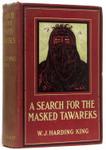
A Search For The Masked Tawareks by W J Harding King (1903) is an account of King's explorations in the far south of Algerian. He wanted to meet the 'marauding' nomadic Tawereks, also known as Tuaregs, because at that time, very little was known about them. Free eBook
Richard & John Lander
Richard Lemon Lander (1804 - 1834) was an English explorer of western Africa. He and his brother were the first Europeans to follow the course of the River Niger, and discover that it led to the Atlantic.
Richard Lander accompanied Hugh Clapperton as his manservant on his second expedition to explore the Niger in 1825. The expedition disembarked on the Nigerian coast determined to strike inland to Sokoto, then descend the Niger to the Atlantic. Most of the party died of malaria en route and it was only Clapperton and Lander who made it to Sokoto. The local ruler, Mohammed Bello, who had tried to trick Clapperton with a false map on his first expedition with Denham, agreed to allow them to return to the sea by way of the Niger. With success all but guaranteed, Clapperton fell victim to malaria and dysentery and Lander was left to make his way bak alone through territory controlled by hostile tribes. Lander returned to Nigeria in 1830 on a government-backed expedition accompanied by his brother John and successfully descended the last section of the Niger from Bussa to the Atlantic.
On the MacGregor Laird expedition, while journeying upstream in a canoe, Lander was attacked by locals and wounded by a musket ball in his thigh. He managed to return to the coast, but died there from his injuries.
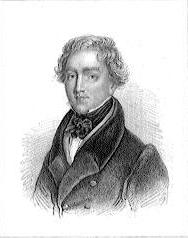
Journal Of An Expedition To Explore The Course And Termination Of the Niger; With A Narrative Of A Voyage Down That River To Its Termination by Richard & John Lander (1832) recounts Richard Lander and his younger brother John's expedition to explore the principal river in west Africa, the Niger, in 1830. They would return home in 1831, only for Richard to return to the Niger River one year later in 1832 as leader of yet another expedition that was organised by Scottish merchant MacGregor Laird. Free eBook Volume I | Free eBook Volume II | Free eBook Volume III
Edward Liveing
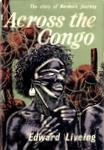
Across The Congo by Edward Liveing (1962) is the story of Hermann Norden's epic trek from the Indian Ocean to the Atlantic across the Congo in 1923, the first crossing since Stanley's 46 years before.
Christopher Lloyd
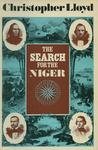
The Search For The Niger by Christopher Lloyd (1973) tells the story of the search for the River Niger. Its source was well known but nobody knew where it flowed or if it simply disappeared in the Sahara desert. He explains how the river shown to flow first north-east, then east and finally south-east to the Bight of Biafra.
Emil Ludwig
Emil Ludwig (1881 - 1948) was a German-Swiss author, known for his biographies of historical figures like Napolean, Lincoln and many more.
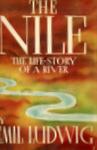
The Nile: The Life-Story Of A River by Emil Ludwig (1937) contains scientific, anecdotal, legendary and historical material on the native tribes, the races, explorers and conquerors that penetrated the far reaches of the Nile. Between 1930 and 1934, Ludwig took three journeys to countries through which the White Nile and Blue Nile flow. However, he points out he did not include any material on big game hunting expeditions to the Nile because he did not take part in any. Free eBook
Adolphus Frederick, Duke Of Mecklenburg
Adolf Friedrich Albrecht Heinrich, Duke of Mecklenburg-Schwerin, (1873 - 1969) was a German explorer in Africa, the elected Duke of the United Baltic Duchy and the first president of the National Olympic Committee of Germany.
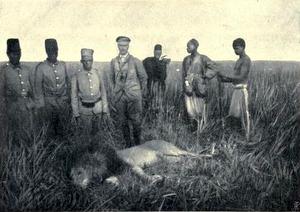
In The Heart Of Africa by Adolphus Frederick, Duke Of Mecklenburg (1910) is about a scientific expedition to Central Africa in 1907-1908 ending by crossing the continent via the Congo river. Much on the native peoples encountered, still untouched by contact with Europeans and missionaries, landscapes and big game hunting. Translated by G E Maberly-Oppler. Vol I Free eBook Vol II Free eBook Vol III Free eBook
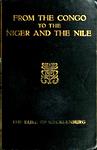
From The Congo To The Niger And The Nile: An Account Of The German Central African Expedition 1910-1911 by Adolphus Frederick, Duke Of Mecklenburg (1913). Exploring the country bordering the Congo and Utangi Rivers, between Lakes Victoria and Livu, the basins of Gubingi and Shari Rivers and Lake Chad regions. Also extensive travel through the Cameroons and Nigeria as well as part of Sudan. Much elephant hunting throughout, plus buffalo, rhino and other game. Vol I Free eBook Vol II Free eBook
Dr Hans Meyer
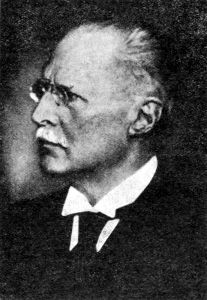
Hans Heinrich Josef Meyer (1858 - 1929) was a German geologist who is credited with being the first European to reach the summit of Mount Kilimanjaro
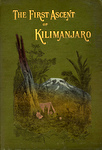
Across East African Glaciers: An Account Of The First Ascent Of Kilimanjaro Dr Hans Meyer (1891) documents the first undisputed ascent of Kibo Peak, the the higher of the two peaks of Kilimanjaro, the highest point in Africa. This was Meyer's third attempt on the mountain, two previous attempts in 1887 and 1888 having been unsuccessful. The present attempt was made in 1889 with a well-equipped support team and in the company of the mountaineer Ludwig Purtscheller and the painter Ernst Platz. The epic ascent took three days, during which time many hardships were overcome. Several scientific observations were carried out and the massif was mapped for the first time.
Eduard Mohr
Eduard Mohr (1828 - 1876) (also known as Edward Mohr) was the first German explorer to reach the Victoria Falls, in 1870, 15 years after Livingstone. A competent botanist, entomologist, zoologist and mapmaker, his book is a classic of Victorian travel in Southern Africa. As a sportsman, Mohr travelled to the Victoria Falls partly for the sake of hunting, partly in the hope of making geographical discoveries.
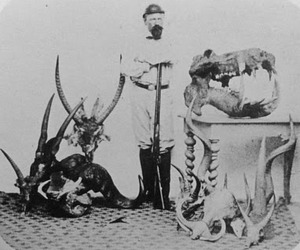
To The Victoria Falls Of The Zambesi by Eduard Mohr (1876) As a sportsman, Mohr travelled to the Victoria Falls partly for the sake of hunting, partly in the hope of making geographical discoveries. After landing at Cape Town, he and his companions ventured into the interior, crossing the Tugela River and enjoying a wide variety of sport.
Joachim John Monteiro
Major Joachim John Monteiro, also known as Jose Maria Correa Monteiro (1833 - 1878), was a British-born Portuguese colonial official, naturalist and mining engineer. Monteiro studied at the Royal School of Mines and at the College of Chemistry in London. His first visit to Angola was in the year 1858, when he went to work the malachite deposits at Bembe. While there he found that the fibres of the baobab tree were suitable for making paper and after returning to the coast in 1865 he spent years in exploiting this discovery. While exploring various regions of Angola he collected plants, birds, some mammals and other natural history specimens and distinguished himself through his remarkable observations on animal life. Monteiro's hornbill, Tockus monteiri, was named after him in 1865, as were several other species of birds and plants.
In 1876 he and his wife, Rose, settled in Lourenco Marques (now Maputo, Mozambique), where he served as a labour and emigration agent for the government of the Cape Colony until his death two years later.
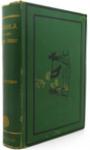
Angola And The Congo River by Joachim John Monteiro (1875) 2 Volumes. The author spent many years travelling in the country between the Congo River and Mossamedes or Little Fish Bay, a region in present-day Angola. He includes all aspects of his experiences including aspects of native life, manners and customs. The illustrations are particularly beautiful. A scarce work by this Portuguese explorer. Free eBook Volume I Free eBook Volume II
Hermann Norden
Hermann Norden (1871 - 1931) was an intrepid American explorer and adventurer. He was born in Germany and went to America aged 16 to work in the cotton industry. He quit in 1911 to start travelling the world untouched by western influences. After all these adventures, he died aged 61 years from a head injury after falling in a London street.
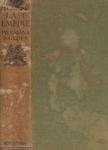
Africa's Last Empire: Through Abyssinia To Lake Tana And The Country Of The Falasha by Hermann Norden (1930) is a memoir and account of the author's travels in Abyssinia and his encounters with the Falasha who were Ethiopians of Jewish faith.
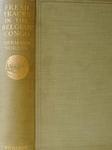
Fresh Tracks In The Belgian Congo: From The Uganda Border To The North Of The Congo by Hermann Norden (1924) is an account of several months' journey on foot through the Congo, with observations on Belgian administration, village life and native customs.
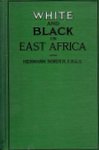
White And Black In East Africa by Hermann Norden (1924) is an account of Kenya & Uganda by an American explorer and adventurer in the early 1920's. There are some episodes of hunting plains game.
Paolo Novaresio
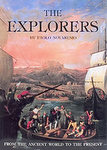
The Explorers: From The Ancient World Until The Present by Paolo Novaresio (1996) includes numerous stories of amazing explorers and their extraordinary voyages of discovery - from Alexander the Great to the Apollo Moon landings.
William Peel
Sir William Peel (1824 - 1858) was the third son of Sir Robert Peel (former UK Prime Minister) and had a distinguished career in the Royal Navy. He served during the Crimean War at Sevastopol and the battle of Inkerman, later participating in the military reaction to the Indian Mutiny. His bravery would see him become one of the first recipients of the Victoria Cross.
A Ride Through The Nubian Desert by Willim Peel (1852) recounts his 1851 journey through the African interior. Peel made meticulous preparations for his expedition, including intense study of the Arabic language under the tutelage of Joseph Churi, with whom he would travel. The pair departed in August, tracing a path north up the Nile, crossing the desert of Khartoum into al-Ubayd. Their progress was fraught with peril and beset by severe fever. Safely returning to England in January 1852, Peel immediately set about composing this memoir. Free eBook
Dr Karl Peters
Dr Karl Peters (1856 - 1918) was a German explorer, journalist and philosopher. He was instrumental in the founding of German East Africa and helped create the European "Scramble for Africa".
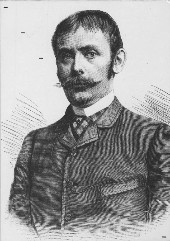
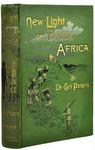
New Light On Dark Africa by Karl Peters (1891) is the German counterpart to Stanley's 'In Darkest Africa' - a German Emin Pasha expedition. This represents Peter's journey to find Emin Pasha on the Upper Nile, but approaching from Africa's east coast. Peters followed Pigott in exploring the Tana river and gained notoriety by his political activities to secure influence in the interior. This roused the British, in an effort to counteract his activities, to explore both Kenya Colony and Uganda. Free eBook
Maria Petringa
Pietro Paolo Savorgnan di Brazzà, later known as Pierre Paul François Camille Savorgnan de Brazza (1852 – 1905) was an Italian-born, naturalized French explorer. He explored central Africa and reached far into the interior along the right bank of the Congo. Under French colonial rule, the capital of the Republic of the Congo was named Brazzaville after him and the name was retained by the post-colonial rulers. The De Brazza's monkey of central Africa was named after him.
Brazzà: A Life For Africa by Maria Petringa (2006) tells the story of Pierre Savorgnan de Brazzà, a European explorer, colonial governor and human rights investigator. He gave his life trying to expose the abuse and torture of enslaved African workers in the rubber-producing regions of Congo, Gabon and elsewhere in equatorial Africa.
Major Serpa Pinto
Alexandre Alberto da Rocha de Serpa Pinto, Viscount of Serpa Pinto (1846 - 1900) was a Portuguese explorer in Africa. One of his journeys included exploring the southern African interior in 1877 with Capello and Ivens. All three had African experience and left Benguela in November. Soon after their departure, however, they parted company with Capello and Ivens turning northward whilst Serpa Pinto continued eastward, gradually shifting his course to the Victoria Falls and on to Pretoria. Serpa Pinto was the fourth explorer to cross Africa from west to east.
How I Crossed Africa by Major Serpa Pinto (1881) 2 Volumes. Serpa Pinto headed the Portuguese exploring expedition through central south Africa from Benguella on the west African coast to the upper Zambezi regions. It was an important expedition, more to explore than to hunt, but it is one of the most important ever done on this area. He did manage to hunt lions and elephant. Free eBook Vol 1 Free eBook Vol 2
Winwood Reade
William Winwood Reade (1838 - 1875) was a British historian, explorer and philosopher. Though Reade travelled over some unexplored territory, his findings excited little interest among geographers, due mostly to his failure to take accurate measurements of his journey as his sextant and other instruments had been left behind at Port Loko.
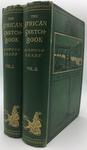
The African Sketchbook by Winwood Reade (1873) 2 Volumes. Includes accounts of the first two of Reade's three trips to Africa in 1862, 1869 and 1873. He was prompted to visit Africa following the publication in 1861 of du Chaillu's theories on the gorilla as being aggressive, powerful animals. He spent five months in Gabon and was able to produce evidence to the contrary. His second trip took him to Sierra Leone where he explored sources of the Niger, reached Faluba before finally becoming the first European to visit the gold mines of Bouri.
Savage Africa: Being The Narrative Of A Tour In Equatorial, Southwestern And Northwestern Africa by Winwood Reade (1863) is the account of the author's first African journey. He arrived in Cape Town by paddle steamer in 1862 and spent several months of observing gorillas and travelling through Angola.
Charles Richards & James Place
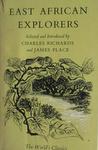
East African Explorers edited by Charles Richards & James Place (1960) is a selection of the writings of Krapf & Rebman, Livingstone, Stanley, Burton, Speke, Grant, Baker, Thomson, Casati, Teleki & von Hohnel, Gregory, Lugard, Austin and other major East African explorers.
James Richardson
James Richardson (1809 - 1851) was a British explorer known for his expeditions into the Sahel region of the Saharan desert. After he had published his Sahara volumes, he made an expedition into Sudan and to Lake Chad. Then in 1850 Richardson went to Ghat again, this time with Heinrich Barth and Adolf Overweg. James Richardson died of an unknown illness on this journey in March 1851 near Lake Chad. Overweg also died of an unknown illness on this 5 year journey, which left Barth to continue alone.
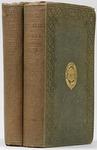
Travels In The Great Desert Of Sahara, In The Years Of 1845 And 1846 by James Richardson (1848) is a two volume account of the author's 1845 Sahara expedition which he joined in Tripoli. He became the first European to visit Ghat, in the Fezzan region of southwestern Libya, located just east of the Algerian border. After a nine-month journey through Fezzan, he arrived arrived back in Tripoli. His account includes descriptions of the major cities in the Fezzan region, trade routes, oases, and the culture, religion and traditions of the Tuaregs. Free eBook
Robert I Rotberg
Robert I Rotberg is President of the World Peace Foundation and academic in political science and history. Among the many books he wrote are some about African exploration.
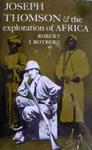
Joseph Thomson And The Exploration Of Africa by Robert I Rotberg (1971) is the first full biography about Joseph Thomson. Towards the end of the era of African exploration Joseph Thomson was active in a surprising number of geographical areas such Mozambique, Tanzania, Zambia, Malawi and the Congo. He opened trade routes, made maps and wrote books but died at the age of 37. The appendices show Thomson's outfit and expenses, a list of all the porters and copies of the original treaties made by Thomson on behalf of the British South Africa Company. Thompson's articles and books are listed.
Africa And It's Explorers: Motives, Methods And Impact by Robert I Rotberg (1970) follows the careers of Heinrich Barth, David Livingstone, Richard Burton, John Hanning Speke, Samuel White Baker, Gerhard Rohlfs, Henry Morton Stanley, Verney Loveltt Cameron and Joseph Thomson.
Dr G Schweinfurth
Dr Georg August Schweinfurth (1836 - 1925) was born in Latvia of German parentage. He was a distinguished botanist, scholar and African explorer. He made three journeys in the Sudan to collect plant specimens.
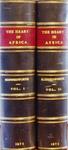
The Heart Of Africa: Three Years Travels And Adventures In The Unexplored Regions Of Central Africa From 1868 To 1871 by Dr G Schweinfurth (1873) is an account of his second expedition when he explored the hydrology of the Bhar el Ghazal and the forests of the Nile - Congo area. A true classic of African exploration in two volumes. Vol I Free eBook Vol II Free eBook
Emin Pasha In Central Africa: Being A Collection Of His Letters And Journals Edited & Annotated by Dr G Schweinfurth et al (1888). Emin Pasha (1840-1892) was born Eduard Schnitzer and served under General Charles Gordon in Sudan as a district medical officer. In 1878 he succeeded Gordon as governor of Equatoria, the southernmost province of the Egyptian Sudan. In 1885 he was cut off from the outside world by the Mahdist uprising, and several European explorers, including Henry Morton Stanley, were sent to rescue him. Although his position was not desperate, he finally agreed to accompany Stanley to Mombasa. He was murdered while engaged in exploration for Germany in the region of Lake Tanganyika. Free eBook
Timothy Severin
The African Adventure: Four Hundred Years Of Exploration In The Dangerous Continent by Timothy Severin (1973) is a comprehensive and entertaining survey of the exploration of Africa from its earliest days to the heyday of Livingstone, Burton et al.
Kuno Steuben
Kuno Schmutnig (1937 - 2004) was a German sailor who wrote under the pseudonyms Kuno S Steuben and Kuno Sch Steuben. After many boat expeditions in Europe, in 1960, he built a raft on a Nile bridge and drifted downstream on the Blue Nile some 300 km. He ws injured in an encounter with four Oromo men and about two weeks later ended his raft trip. He was weakened by the injury, dysentery, malaria and malnutrition and stranded on the shore, where he was found by locals and returned to the Nile Bridge after 10 days.
Alone On The Blue Nile by Kuno Steuben (1973) is a fascinating account of the author's solo expedition attempting to descend the Blue Nile, beginning from Lake Tana in Ethiopia. All previous attempts to descend this river had failed and some had ended in disaster. Steuben succeeded, using a papyrus canoe (destroyed) and then a small raft made of poles and a pair of oil drums. Lots of hunting for the pot, attacks by bands of natives and tropical diseases. Steuben lists all other attempts on the Blue Nile known to him, before and after his own expedition.
James K Tuckey
Captain James Kingston Tuckey (1776 - 1816) was an Irish-born British explorer and a captain in the Royal Navy. He led an official British expedition to explore the Congo river in 1816. Voyaging in his specially designed ship 'Congo', together with its supply vessel the 'Dorothy', Tuckey travelled deep into unexplored central Africa, until a combination of impassable cataracts and fever in him and his crew forced him to turn back. He died soon afterwards from hepatitis and general exhaustion.
Narrative Of An Expedition To Explore The River Zaire, Usually Called The Congo, In 1816 by James K Tuckey (1918) is composed of Tuckey's expedition journal, together with notes on the people they encountered and on the flora and fauna of the regions they traversed made by Professor Smith, the expedition's scientific advisor. The notes include observations on tribal customs, the slave trade and a vocabulary of the languages of the Malemba and Embomma tribes. Free eBook
Seymour Vandeleur
Major Cecil Foster Seymour Vandeleur (1869 - 1901) served in the Scots Guards rising to the rank of Major. In 1894 he was sent on special service to Uganda, and from then on saw almost continual service. In 1895 he took part in the Unyoro expedition, the following year he served on the Nile, then he took a prominent and gallant part in the Niger expedition of 1897. The same year the Royal Geographical Society awarded the Murchison Grant to him for his valuable work in surveying in East Africa and the Niger district. He surveyed no less than 2073 miles.
In 1898 Major Vandeleur went out to Africa again, and served with the Egyptian Army in the Sudan expedition of 1898. He was wounded at the battle of Khartoum, and received the Medjidieh Medal for his gallantry. He was killed in 1901 aboard a train which was blown up and fired on by Boers in South Africa.
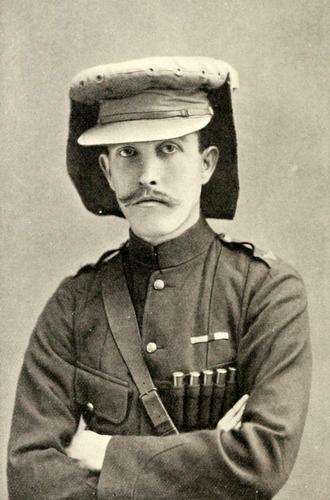
Campaigning On The Upper Nile And Niger by Seymour Vandeleur (1898) is an account of his explorations in East and West Africa, from the Nile to the Niger rivers. It also describes the military actions in which he was involved. Free eBook
Book About Cecil F Seymour Vandeleur:
Frederick Ivor Maxse
General Sir Frederick Ivor Maxse (1862 – 1958) was a senior British Army officer who served in the Egyptian Army where he was present at the Battle of Atbara and the Battle of Omdurman where he must have known Seymour Vandeleur. He went on to serve in the Second Boer War and the First World War.
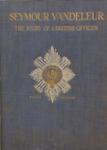
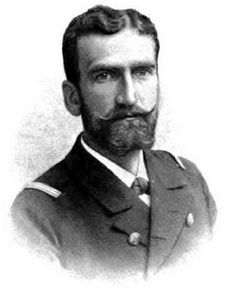
Seymour Vandeleur: A British Officer by Frederick Ivor Maxse (1905) is a memoir of Brevet-Lieutenant-Colonel Seymour Vandeleur, DSO, an officer with the Scots Guards and the Irish Guards, who served in Uganda from 1894, in the Niger Expedition of 1897 and in the Sudan at Omdurman in 1898. He was eventually shot during a train ambush in South Africa in 1901 where he died as a martyr. This volume describes his campaigns and the part played by British officers in the acquisition of African colonies and dependencies at this time. Free eBook
Ludwig Von Hohnel
Ludwig Von Hohnel (1857 - 1942) was an Austrian naval officer and explorer. He was part of the Count Teleki expedition to Northern Kenya in 1887-1888 and were the first Europeans to see Lake Turkana, which they named Lake Rudolf. Von Hohnel also explored the area around Mount Kilimanjaro in 1892 with American magnate William Astor Chanler. They also explored the north-eastern part of the Mount Kenya massif and the Guaso Nyiro river where he was gored by a rhinoceros.
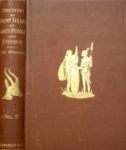
Discovery Of Lakes Rudolph And Stefanie by Ludwig von Hohnel (1888). Adventures of this important expedition are interesting not only because Teleki discovered two new major African lakes but also to sportsmen because the purpose of this trip was also to hunt for African big game. His favourites were elephant and black rhinoceros. He endeavored to find new haunts for game in previously unexplored areas. An African classic. Free eBook
Hermann Von Wissmann
Hermann Wilhelm Leopold Ludwig Wissmann (1853 - 1905) (later known as Hermann Von Wissmann) was a German explorer and administrator in Africa. He was the first of the 19th century explorers of Africa to traverse the continent from west to east.
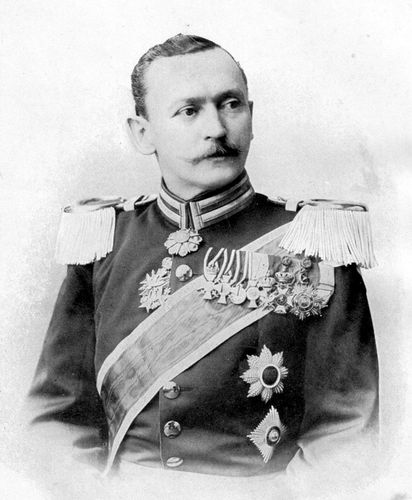
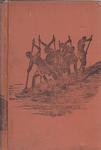
My Second Journey Through Equatorial Africa From The Congo To The Zambesi In The Years 1886 And 1887 by Hermann Von Wissmann (1891). A noted German explorer, von Wissman travelled through the Belgian Congo, then on through both British and German East Africa. His narrative recounts the difficulties of his expeditions, being somewhat reminiscent of Henry Stanley's experiences. He tries his hand, unsuccessfully, in the Belgian Congo for elephant, but does bag buffalo and hippopotamus at Stanley Pool. There are additional episodes on hunting leopard and crocodile. Free eBook
Ferdinand Werne
Ferdinand Werne (1822 - 1874) was a German lawyer who initially worked as a diplomat in Istanbul and Alexandria before becoming an African explorer. In 1841, he joined an expedition organised by Muhammed Ali Pascha, Viceroy of Eygpt, to discover the source of the White Nile. Under the leadership of the Turkish officer, Selim Qaduban, they penetrated as far as Gondokoro. Werne kept a diary of valuable scientific observations and produced the first European map of the river between Khartoum and Gondokoro, which was reputed to have been used by Burton, Speke, and Baker. He returned to Berlin in 1844 having brought back a mass of material from the White Nile region for the Botanical Garden in Berlin and the Berlin Museums. He wrote an account of the journey that was published in German in 1848 and in English, translated by Charles William O'Reilly, in 1849.
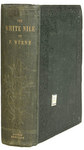
Expedition To Discover The Sources Of The White Nile, In The Years 1840, 1841 by Ferdinand Werne (1849). 2 Volumes. This is an account which was published nine years before Speke discovered Victoria Nyanza as the head of the White Nile. Under the command of the Turkish officer, Selim Bimbashi, the European expedition members included Georges Thibaut, French consul in Khartoum, as expedition collector, Théodore Louis Joseph-Pons d'Arnaud known as Arnaud-Bey, a French geographer, explorer and naturalist, and Raymond Sabatier were the expedition engineers. The German author of this book, Ferdinand Werne, writes that he was an "independent passenger at my own expense". Free eBook Vol I Free eBook Vol II
A F R Wollaston
Alexander Frederick Richmond 'Sandy' Wollaston (1875 - 1930) was a British medical doctor, ornithologist, botanist, climber and explorer. In 1903, after qualifying as a doctor, Wollaston decided to spend his life on exploration and natural history, travelling extensively and writing books about his travels. After becoming a tutor at Cambridge Univerity, he was shot dead, along with a police officer, by a deranged student who then killed himself.
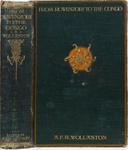
From Ruwenzori To The Congo: A Naturalist's Journey Across Africa by A F R Wollaston (1908) is an account of the British Museum Ruwenzori Expedition under the leadership of R B Woosnam with R E Dent, Douglas Carruthers and G Legge. Just days before they departed, it was decided that they needed a doctor, so Wollaston joined the expedition at the last minute. G. Legge. Free eBook
Stanislaus Laurello And Hans Downe In Roughest Africa 1923
Two African explorers, Stanislaus Laurello and Hans Downe, travel round Africa, on a detour from Los Angeles to Hollywood, trying to capture and photograph animals, but have more encounters than they had hoped for. Some animals encountered are bears, emus, an elephant and a family of lions. Directed by Ralph Ceder and starring Stan Laurel, James Finlayson and Katherine Grant. Silent film with musical sound track.
Shakari Connection Home
>
Bookshelf
>
African Explorer Books
Back to Top


DVDs
Africana
- Africana Books
- Africana Books Page 2
- Africana Books Page 3
- Joy Adamson Books
- Jon Arensen Books
- Michael Asher Books
- Erwin A Bauer Books
- Peter Beard Books
- Karen Blixen Books
- Bartle Bull Books
- Lewis Cotlow Books
- Jack Couffer Books
- John Gordon Davis Books
- Arthur Radclyffe Dugmore Books
- Major E A T Dutton Books
- Venn Fey Books
- James Percy FitzPatrick Books
- Jean-Pierre Hallet Books
- Robert Halmi Books
- Susanne Hart Books
- Elspeth Huxley Books
- Pascal James Imperato Books
- Cherry Kearton Books
- Beryl Markham Books
- Peter Matthiessen Books
- Chris McBride Books
- Stephen Mills Books
- Heinrich Oberjohann Books
- Thomas Pakenham Books
- Victor Pohl Books
- Edward Alexander Powell Books
- David Read Books
- Charles F Rey Books
- Eric Robins Books
- Daphne Sheldrick Books
- Charles Sweeney Books
- Errol Trzebinski Books
- Elizabeth Watkins Books
- Richard West Books
General Hunting
- African Hunter Magazine Books
- Hunting History Books
- William Baillie-Grohman Books
- Hunting Philosophy Books
- Practical Hunting Books
- Tom Brakefield Books
Bowhunting & Archery
Taxidermy
Sporting Firearms Authors
- Gerald Burrard Books
- Donald Dallas Books
- George Leonard Herter Books
- Elmer Keith Books
- Charles Singer Landis Books
- Richard Mann Books
- Edward Matunas Books
- Marco E Nobili Books
- Jack O'Connor Books
- John E Parsons Books
- Clair F Rees Books
- Townsend Whelen Books
- R L Wilson Books
Sporting Firearms Countries
Sporting Firearms
- Sporting Rifle Books
- Big Bore Rifle Books
- Shotgun And Shooting Books
- Firearm Optics Books
- Sporting Firearm Engraving Books
- Muzzle-loader & Black Powder Hunting Books
Ammunition & Reloading
Gunmakers
- Boss & Co. Firearms Books
- Browning Firearms Books
- Churchill Firearms Books
- Cogswell & Harrison Firearms Books
- A H Fox Firearms Books
- Greener Firearms Books
- Holland & Holland Firearms Books
- W J Jeffery Firearms Books
- Purdey Firearms Books
- W & C Scott Firearms Books
- Westley Richards Firearms Books
Women Hunters
- Women Hunter Books
- Delia Akeley Books
- Mary Jobe Akeley Books
- Mary Hastings Bradley Books
- Lady Florence Dixie Books
- Agnes Herbert Books
- Isabel Savory Books
- Grace Thompson-Seton Books
- Gabrielle Vassal Books
Women Travellers & Settlers
- Women Traveller Books
- Ilka Chase Books
- Rosita Forbes Books
- Ida Hurst Books
- June Kay Books
- Sheila MacDonald Books
- Alexandrine Tinne Books
- Sara Tucker Books
Sheep And Mountain Hunting
- Sheep Hunting Books
- Robert M Anderson Books
- Russell Annabel Books
- John H Batten Books
- William Hornaday Books
Hunting Magazines
Create Your Own Website

Affiliate Disclosure
Shakari Connection is a participant in the Amazon Services LLC Associates Program, an affiliate advertising program designed to provide a means for sites to earn advertising fees by advertising and linking to amazon.com
Visitors' Favourite Pages

|
|
|

|
|
| Double Rifles | Baboon Hunting | Safari Hats | Insect Repellents For Africa | African Hunter Shot Placement |


Copyright © 2008-2024. All rights reserved. No part of this website may be reproduced for publication without written permission.